
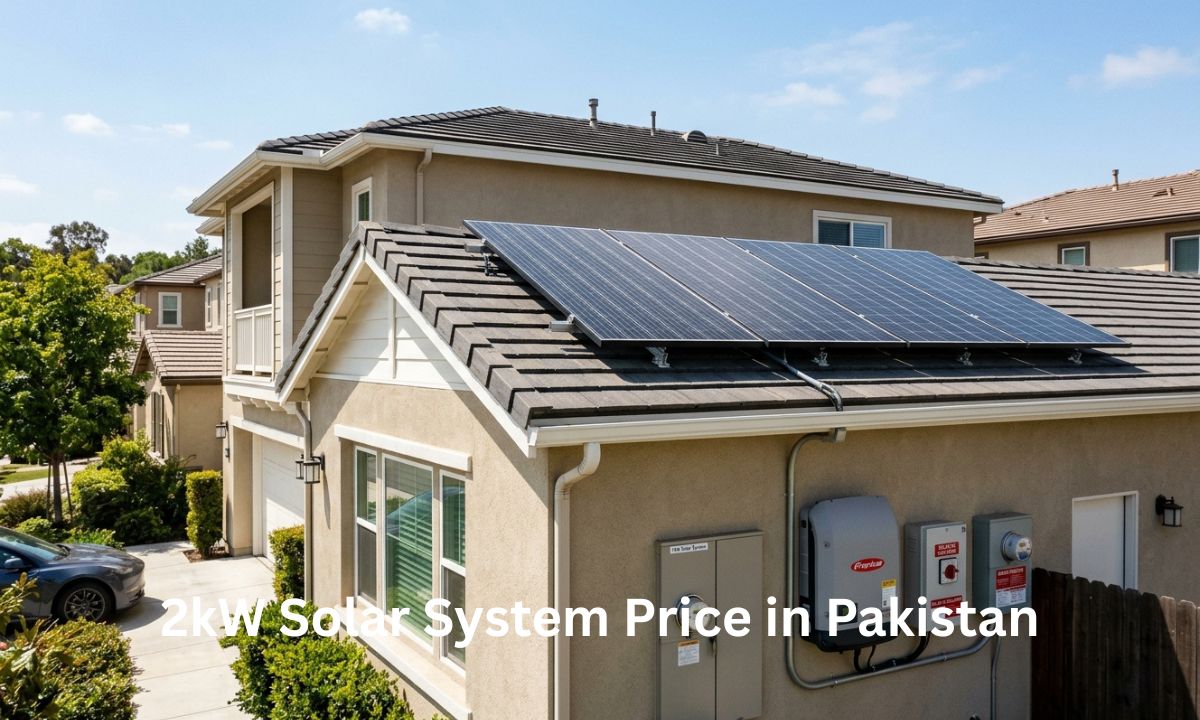
2kW solar system price in Pakistan. This small system is perfect for a small home with basic needs. It can run your fans, lights, fridge, and TV without any problem.
In 2026, the price of a 2kW on-grid solar system starts from around PKR 180,000. An off-grid system with battery backup costs more, up to PKR 390,000. The price changes based on your city, the brand you choose, and the type of system. I will explain all these details in simple words below.
A 2kW system can generate 8 to 10 units of electricity every day. This means big savings on your monthly electricity bill. With net metering, you can also send extra units back to the grid. Let’s look at the full price breakdown for 2026 together.
2kW Solar System Price Calculator Pakistan 2026
Calculate the estimated price of a 2kW solar power system in Pakistan based on your choice of panels, inverter, battery backup, and setup components.
Estimated 2kW Solar System Price
Estimated total: ₨ 316,000
| Component | Estimated Cost (PKR) |
|---|---|
| Solar Panels (4x 580W) | ₨ 97,440 |
| Inverter (Hybrid) | ₨ 92,499 |
| Batteries (2.4 kWh) | ₨ 52,800 |
| Mounting Structure | ₨ 13,000 |
| Installation Labor | ₨ 19,200 |
| Electrical Accessories & Logistics | ₨ 37,000 |
| Total Estimated Cost | ₨ 311,939 |
Estimated Cost per kW: ₨ 155,970 / kW
2kW Solar System Price in Pakistan 2026
The estimated price of a complete 2kW solar system in Pakistan in 2026 ranges between PKR 260,000 to PKR 360,000. Simple off-grid setups without batteries fall towards the lower end, while premium hybrid systems with high-capacity tubular or LiFePO4 batteries are priced near the upper range.
What Is Included in a 2kW Solar System?
A standard 2kW solar kit comes equipped with:
- High-Efficiency Solar Panels: 3 to 4 panels (540W–600W range).
- Inverter Unit: 2.2kW to 3kW Pure Sine Wave Hybrid or Off-Grid Solar Inverter.
- Mounting Racks: Heavy-duty galvanized iron framing (L3/L4 structures).
- Electrical Protection: DC circuit breakers, AC breakers, and lightning/surge protection.
- Cabling: Pure copper 4mm/6mm solar DC cable and battery interlinks.
- Battery Unit (Optional): 1x or 2x 200Ah Tubular batteries or compact 24V Lithium battery pack.
What Can You Run on a 2kW Solar System?
A 2kW solar system easily covers small-to-medium home power requirements during daytime hours, including:
- 6 to 10 LED Lights / Energy Savers
- 4 to 5 Ceiling Fans (or Inverter Fans)
- 1 LED TV, Computer, & Wi-Fi Router
- 1 Refrigerator / Inverter Fridge
- 1 Inverter Water Pump or DC Air Cooler (during peak sun hours)
How Many Panels Are Needed for a 2kW System?
Depending on panel wattage ratings, a 2kW system typically requires 3 to 4 physical modules:
- 540W Panels: 4 panels (2,160W total capacity)
- 580W Panels: 4 panels (2,320W total capacity)
- 600W Panels: 3 to 4 panels (1,800W – 2,400W capacity)
How Much Electricity Does a 2kW Solar System Produce?
Given Pakistan’s daily solar irradiation profile (~5 peak sun hours):
- Daily Generation: ~8 to 10 units (kWh) per day.
- Monthly Generation: ~240 to 300 units (kWh) per month.
What is a 2kW Solar System?
A 2kW solar system is a small solar setup that produces about 2000 watts of electricity at its peak. It is one of the most popular sizes for small homes in Pakistan.
This system uses solar panels, an inverter, wiring, and a mounting frame. Some 2kW systems also come with a battery for backup power. I always tell my clients that a 2kW system is like a small helper. It cannot power a huge house, but it can easily handle daily needs like fans, lights, and a fridge.
In simple words, a 2kW solar system turns sunlight into electricity. This electricity runs your appliances during the day. Any extra power can charge a battery or go back to the grid, depending on the system type.
Pro tip: Before buying, always check your last three electricity bills. This tells you your real monthly usage in units. A 2kW system suits homes using around 250 to 400 units per month.
2kW Solar System Price in Pakistan 2026
The 2kW solar system price in Pakistan depends on the type of system you choose. In 2026, prices have become more stable, but they still change based on brand, battery, and installer.
Here is a simple price table based on current market rates:
| System Type | Price Range (PKR) | Battery Included |
| On-Grid System | 180,000 – 220,000 | No |
| Hybrid System | 280,000 – 350,000 | Yes (lithium or lead-acid) |
| Off-Grid System | 250,000 – 390,000 | Yes (larger battery bank) |
These prices usually include solar panels, inverter, mounting structure, wiring, and installation labor. Some sellers charge extra for net metering paperwork, so always ask this question first.
From my own experience visiting sites in Punjab, I have seen dealers quote very low prices like PKR 150,000. These offers almost always use low-quality or uncertified panels. The panels may look fine on day one, but their output drops fast within a year or two.
Pro tip: Always ask for the panel brand name and inverter model in writing. A written quotation protects you if the installer changes parts later.
On-Grid vs Hybrid vs Off-Grid: Which One Should You Choose?
Choosing the right system type is the most important decision in this whole process. Each type works differently and suits a different kind of home. Let me explain each one in simple words.
On-Grid System (Recommended for Most Homes)
An on-grid system connects directly to the WAPDA or K-Electric line. It has no battery. During the day, solar panels power your home directly.
Any extra electricity goes back to the grid through net metering. Your electricity meter runs backward, and this lowers your monthly bill. At night, your home simply uses grid power as normal.
This system is the cheapest option and works best for homes that mainly need power during the day. It is not useful during load shedding, because it automatically shuts off when the grid goes down. This is a safety rule, not a fault in the system.
Best for: City homes with stable electricity and low load shedding.
Hybrid System (Best for Load Shedding Areas)
A hybrid system is a mix of on-grid and battery backup. It uses solar power during the day, stores extra energy in a battery, and switches to battery power automatically during a power cut.
This is the most popular choice in Pakistan right now. Areas with frequent load shedding benefit the most from this system. I have installed many hybrid systems in small towns, and families are always happy because their fans and lights keep running during outages.
The price is higher than on-grid because of the battery cost. But most families feel it is worth the extra money.
Best for: Homes in areas with regular load shedding that still want net metering benefits.
Off-Grid System (For Remote Locations)
An off-grid system does not connect to WAPDA at all. It runs completely on solar panels and batteries. This system is common in villages and farms where grid electricity is weak or unavailable.
Since there is no backup from the grid, the battery bank must be strong enough to cover night-time use. This makes off-grid systems more expensive and harder to manage for a 2kW size.
Best for: Farms, remote villages, and areas with no reliable WAPDA connection.
Here is a quick comparison table to help you decide:
| Feature | On-Grid | Hybrid | Off-Grid |
| Works during load shedding | No | Yes | Yes |
| Needs a battery | No | Yes | Yes |
| Net metering support | Yes | Yes | No |
| Best for | City homes | Load shedding areas | Remote areas |
| Price level | Lowest | Medium | Highest |
City-Wise 2kW Solar System Price in Pakistan
Prices are not the same in every city. Transport cost, dealer competition, and local demand all play a role. Here is a general city-wise price guide for an on-grid 2kW system in 2026.
| City | Estimated Price (PKR) |
| Lahore | 180,000 – 200,000 |
| Karachi | 185,000 – 210,000 |
| Islamabad/Rawalpindi | 190,000 – 215,000 |
| Faisalabad | 190,000 – 220,000 |
| Multan | 195,000 – 220,000 |
| Peshawar | 195,000 – 225,000 |
| Quetta | 200,000 – 230,000 |
Lahore usually offers the lowest prices because of the large number of dealers on Hall Road. Karachi also gets a small advantage since many panels arrive there by sea. Cities farther from major ports, like Peshawar and Quetta, often pay a bit more due to transport costs.
Pro tip: If you live in a smaller city, ask your installer if they can source panels from Lahore or Karachi directly. This can sometimes lower your final bill.
What Appliances Can a 2kW Solar System Run?
A 2kW solar system produces around 8 to 10 units of electricity per day. This is enough for basic household needs, but you cannot run everything at once.
Here is a simple list of appliances a 2kW system can usually handle together:
- 4 to 5 ceiling fans
- LED lights for the whole house
- One refrigerator
- One LED or LCD TV
- Mobile and laptop charging
- A small water motor for short periods
You should avoid running heavy appliances all at once on a 2kW system, such as:
- Full-size air conditioners
- Electric irons for long periods
- Washing machines with heaters
- Large water pumps
Pro tip: Run heavy appliances like the iron or washing machine during peak sunlight hours, between 11 AM and 3 PM. This is when your panels produce the most power, so you avoid pulling from the battery or grid.
What’s Included in a 2kW Solar System Package?
Many buyers get confused about what a “complete package” actually means. A proper 2kW solar system package should always include the following items:
- Solar panels – usually four panels of around 550 watts each
- Inverter – converts DC power from panels into usable AC power
- Mounting structure – the metal frame that holds panels on the roof
- DC and AC cables – wiring between panels, inverter, and your home
- Protection devices – breakers and surge protectors for safety
- Battery – only included in hybrid and off-grid systems
- Installation labor – the team that fits everything on-site
Always get this list in writing before you pay any advance amount. In my years of working in this field, I have seen many complaints happen simply because a buyer assumed something was included when it was not.
Pro tip: Ask if the mounting structure is made of galvanized iron or simple painted iron. Galvanized structures last much longer, especially in areas with heavy rain.
Monthly Savings and Payback Period
This is the section most people care about the most. How much money can you actually save?
A 2kW solar system typically produces 250 to 300 units of electricity per month. With current electricity rates in Pakistan, this can save a household around PKR 5,000 to 8,000 every month, depending on your tariff slab.
Here is a simple savings breakdown:
| Item | Estimate |
| Monthly units produced | 250 – 300 units |
| Monthly bill savings | PKR 5,000 – 8,000 |
| Yearly savings | PKR 60,000 – 96,000 |
| Typical payback period | 3 to 4 years |
After the payback period, you continue enjoying free electricity from sunlight for many more years. Solar panels usually come with a 25-year performance warranty, so the long-term value is very strong.
Pro tip: Your savings will be higher if your home is in a higher tariff slab. Families using more units per month usually see faster payback than families already using very little electricity.
2kW Solar System With Battery Price
Many families ask me about the 2kW solar system with battery price, especially those living in load-shedding areas. Adding a battery increases your upfront cost but gives you power during outages.
| Battery Type | Extra Cost (PKR) | Backup Time |
| Lead-acid battery | 40,000 – 70,000 | 2 – 4 hours |
| Lithium battery | 100,000 – 180,000 | 4 – 8 hours |
A 2kW system with a lead-acid battery usually costs between PKR 250,000 and 300,000 in total. A 2kW system with a lithium battery can cost between PKR 300,000 and 380,000, depending on the battery size you choose.
Lithium batteries cost more at first, but they last much longer and need less maintenance. From my own field experience, most lead-acid batteries need replacement after 2 to 3 years, while good lithium batteries can run smoothly for 8 to 10 years.
Pro tip: If your budget allows only a small extra investment, choose lithium. The higher price pays off through fewer replacements over time.
How Many Batteries for a 2kW Solar System
The number of batteries depends on the battery type and how many hours of backup you want.
For lead-acid batteries (150Ah, 12V):
- 2 batteries give around 2 to 3 hours of light backup use
- 4 batteries give around 4 to 6 hours of backup use
For lithium batteries, one single unit of around 3.5kWh to 5kWh is usually enough for a 2kW system. This is because lithium batteries store more power in a smaller size compared to lead-acid.
Simple rule I follow on-site: For basic backup (fans and lights only), 2 lead-acid batteries or one small lithium battery is enough. For stronger backup that also includes the fridge, go for 4 lead-acid batteries or one larger lithium battery.
Pro tip: Never mix old and new batteries in the same bank. Mixed batteries charge and discharge at different speeds, which shortens the life of the whole battery bank.
2kW Solar System With Battery Backup
A 2kW solar system with battery backup is basically a hybrid or off-grid system. The main purpose of battery backup is to keep essential appliances running when WAPDA power goes out.
With a well-sized battery, a 2kW system can usually keep the following running during an outage:
- 3 to 4 fans
- LED lights across the house
- The refrigerator
- TV and mobile charging
It usually cannot support a full air conditioner or a large water motor during backup mode, since these appliances need much more power than a small battery bank can supply.
Pro tip: Ask your installer to set “critical load” appliances on a separate backup circuit. This way, only your essential items draw power from the battery, and your battery lasts longer during long outages.
Important Tips Before Buying a 2kW Solar System
Buying a solar system is a big decision, and small mistakes can cost you money later. Here are the most important tips I share with every customer before installation.
- Check your electricity bill first. Make sure a 2kW system actually matches your usage.
- Ask for Tier-1 panel brands. These are tested and more reliable than unknown local brands.
- Confirm the inverter warranty. Most good inverters come with a 5- to 10-year warranty.
- Get everything in writing. Panel wattage, brand names, and battery type should all be listed clearly.
- Avoid the cheapest quote blindly. Very low prices often mean low-quality parts.
- Ask about net metering support. Not every installer helps with the NEPRA net metering application.
- Check the mounting structure quality. Rusty or thin structures fail faster in rain and wind.
- Compare at least three quotations. This helps you understand the fair market price in your area.
Pro tip: A trustworthy installer will always offer a free site visit before giving a final quote. If a dealer refuses to visit your roof, that is usually a warning sign.
Final Thoughts
A 2kW solar system is a smart and affordable way to start your solar journey in Pakistan. It suits small homes, saves money every month, and reduces your dependence on WAPDA electricity. Whether you choose on-grid, hybrid, or off-grid depends mainly on your area’s load-shedding situation and your budget.
From years of working with families across Punjab, I always suggest starting with a system that matches your real usage rather than buying the biggest system you can afford. A well-planned 2kW system can serve a small household reliably for many years, with the panels themselves often lasting over two decades.
Take your time, compare quotations, and always ask questions before paying any advance. A little research today can save you a lot of trouble and money in the years ahead.
“FAQs”
What can a 2kW solar system run?
A 2kW solar system can run small home appliances at the same time. This includes 4 to 5 fans, LED lights for the whole house, one fridge, a TV, and mobile charging. It is not made for heavy appliances like ACs or big water motors.
Can I run 2 ACs on a 2kW solar system?
No, a 2kW system cannot run 2 ACs. Even one small inverter AC uses around 800 to 1000 watts. Running two ACs needs almost all the system’s power, leaving nothing for fans, lights, or the fridge.
What is the price of a 2 kW solar system in Pakistan?
The 2kW solar system price in Pakistan starts at around PKR 180,000 for an on-grid system. A hybrid system with battery backup costs between PKR 280,000 and PKR 350,000. Prices change with your city, brand, and battery type.
How much power will a 2kW solar system generate?
A 2kW solar system generates about 8 to 10 units of electricity per day. This adds up to around 250 to 300 units every month, depending on sunlight hours in your area.
Which is better, 2kW or 3kW?
A 2kW system suits small homes with basic needs like fans, lights, and a fridge. A 3kW system is better if you also want to run a small AC or a washing machine. Choose based on your monthly electricity bill and appliance load.
Is 2kW enough to power a house?
A 2kW system is enough for a small house with light electricity use. It is not enough for a large house with an AC, a water motor, and many appliances running together. For bigger homes, a 3kW or 5kW system works better.

I AM CH SAMI ULLAH, THE TOP SOLAR PANEL SELLER AND INSTALLER IN PAKISTAN, WITH CHEAPEST RATES, OF TOP QUALITY. GET THE LATEST RATES ON SOLAR PANELS, FANS, ACs, TUBE WELLS, SOLAR FRIDGES, AND SOLAR ATTA CHAKKIS. WHATSAPP (03461320821)