
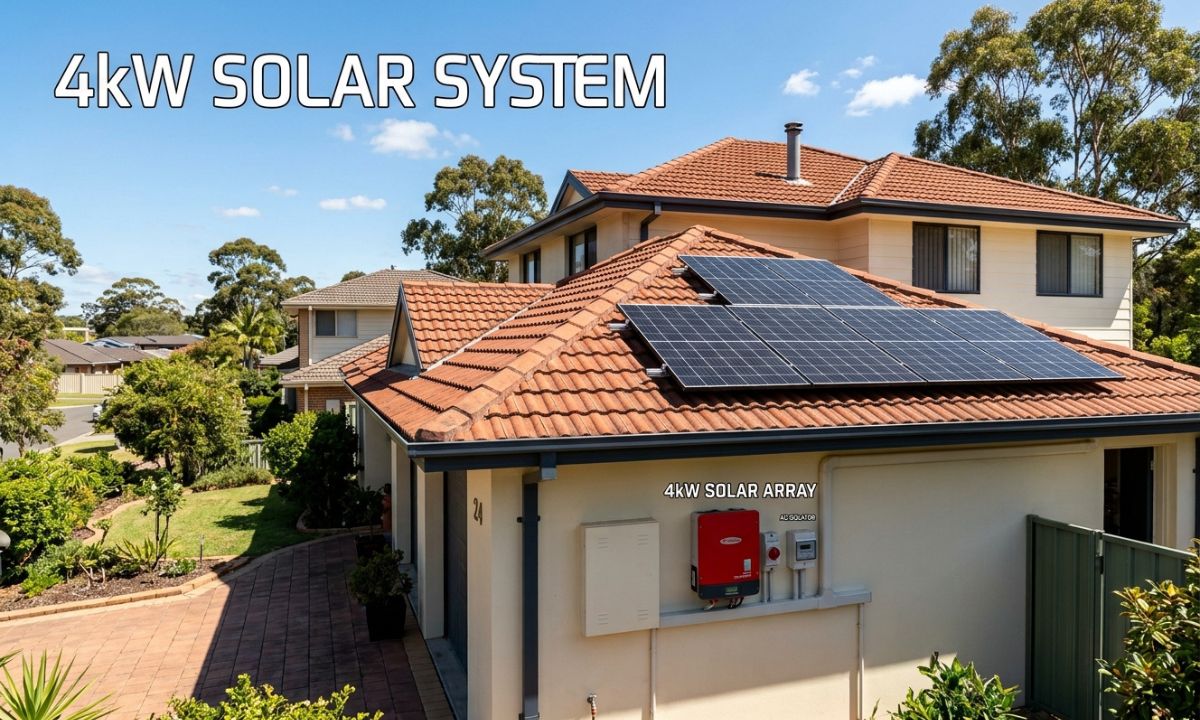
I am Farooq, and I install solar panels in Punjab. Every week, people ask me the same question. They want to know the real 4kW solar system price in Pakistan. So today, I will give you honest numbers.
A 4kW solar system is a good size for many homes. It can run your fans, lights, fridge, and one AC. But the price varies widely from shop to shop. This depends on the inverter brand, battery size, and panel quality you choose.
In this guide, I will break down every cost for you. You will learn the price with and without a battery. You will also see which inverter fits a 4kW system best. By the end, you will know exactly what to ask before you buy.
Estimated System Price
PKR 540,000 – 640,000
Monthly Generation
480 – 520 Units
Annual Generation
6,000+ Units
Estimated Monthly Savings
PKR 30,000+
4kW Solar System Price in Pakistan 2026: At a Glance
If you have been asking installers for a 4kW solar system quote, you already know something strange: no two prices look the same. One shop says PKR 400,000. Another says PKR 750,000. Both call it a “4kW system.”
I am Farooq, and I have installed solar panels on rooftops across Punjab for many years. Let me walk you through what a 4kW system really costs in 2026, and why the numbers jump around so much.
Here is the quick summary before we go deep:
| System Type | Price Range (PKR) | What You Get |
| On-grid 4kW (no battery) | 380,000 – 600,000 | Panels, grid-tie inverter, structure, wiring |
| Hybrid 4kW with small battery (5kWh) | 700,000 – 850,000 | Panels, hybrid inverter, lithium battery, structure |
| Hybrid 4kW with bigger battery (8–10kWh) | 850,000 – 1,050,000 | Panels, hybrid inverter, bigger lithium battery, structure |
| Off-grid 4kW | 750,000 – 1,000,000 | Full battery backup, no grid dependence |
These are installed prices, not just panel prices. Keep this table in mind as we go through each part of the system, because the difference between the cheapest and most expensive quote almost always comes down to what is hidden inside it.
Why Two 4kW Quotations Can Differ by Several Lakhs
This is the question I get asked the most on site visits. A customer shows me two quotes on his phone, and they are both for “4kW,” yet one is nearly double the other.
Here is what actually causes the gap:
- Panel brand and cell type. A Tier-1 N-type panel from a top brand costs more than a budget P-type panel, even at the same wattage.
- Inverter brand. A well-known hybrid inverter with a strong warranty and local support costs more than an unbranded or lesser-known unit.
- Battery inclusion. A system with no battery will always look cheaper than one with a 5kWh or 10kWh lithium battery pack.
- Mounting structure quality. Galvanized iron structures last longer in Pakistani weather than thin, painted ones, but they cost more.
- Wiring and safety gear. DC breakers, surge protectors, and proper cabling add real cost, even though customers rarely see them on a spec sheet.
- Net metering paperwork. Some installers include the DISCO application fee and green meter cost. Others quietly leave it out.
- Labour and after-sales service. A company that gives you a proper installation team and a real warranty visit charges more than a two-man crew working off a motorbike.
My honest pro tip: always ask for a full component-wise breakdown before comparing two quotes. A price that looks “cheap” on WhatsApp often turns into extra charges once the crew is already on your roof.
What is included in a Complete 4kW Solar System?
A proper 4kW solar system is not just panels sitting on your roof. A complete package should include:
- Solar panels – usually 7 to 8 panels, depending on wattage
- Inverter – on-grid, hybrid, or off-grid, matched to your load
- Mounting structure – iron or aluminium frames to hold panels securely
- DC and AC cabling – to carry electricity safely from panels to inverter to your home
- Distribution box and breakers – for protection against overload and short circuit
- Earthing kit – a must for lightning and surge protection
- Battery (optional) – lithium or lead-acid, only needed for hybrid or off-grid setups
- Net metering support – application help for your DISCO, if you plan to go on-grid
If any of these are missing from your quote, ask why. A system missing proper earthing or breakers may look cheaper today, but it is a real safety risk later.
How many Solar Panels are needed for a 4kW System?
This depends entirely on the wattage of the panel you choose. Here is a simple breakdown:
| Panel Wattage | Panels Needed for 4kW | Roof Space Needed (approx.) |
| 450W | 9 panels | 190–210 sq. ft |
| 545W | 7–8 panels | 170–190 sq. ft |
| 585W | 7 panels | 160–180 sq. ft |
| 635W | 6–7 panels | 150–170 sq. ft |
Pro tip from the field: higher-wattage panels mean fewer panels, which means less mounting structure, less wiring, and often a lower total installation cost, even if the per-panel price looks higher. I always tell customers to compare cost per watt, not cost per panel.
Which Solar Panel is Best for a 4kW System?
For a home-sized 4kW system, I usually recommend N-type TOPCon panels if the budget allows. They handle Pakistan’s summer heat better and lose less output as they age. Popular brand choices in the market right now include:
- Jinko Solar – widely available, reliable output
- LONGi Hi-MO – strong efficiency, good local supply
- Canadian Solar – trusted warranty support
- JA Solar – solid mid-range option
If your budget is tighter, a good P-type monocrystalline panel from a known brand still performs well for a 4kW home system. What I avoid recommending is an unbranded panel with no traceable warranty — I have seen too many of these lose 15–20% output within three years.
How much Electricity does a 4kW Solar System Produce?
In most parts of Pakistan, you get around 4.5 to 5.5 peak sun hours per day, depending on season and city.
- Daily generation: roughly 16–22 units (kWh)
- Monthly generation: roughly 480–660 units
- This generally supports an average monthly electricity bill between PKR 10,000 and PKR 20,000, before solar
Real numbers vary with season. In June, a 4kW system can produce close to its maximum. In foggy December mornings in Punjab, output can drop by 30–40% for a few hours a day. Always size your system a little above your daily need, not exactly equal to it.
How many Appliances can run on a 4kW Solar System?
A 4kW system is a comfortable size for a mid-sized Pakistani home. It can typically run:
- Fans (5–8 units)
- LED lights (10–15 bulbs)
- A refrigerator
- A washing machine
- A television and Wi-Fi router
- Water motor / small tube well pump
- One inverter AC (1 to 1.5 ton), run carefully alongside other basic loads
Running two ACs together on 4kW is usually not comfortable unless both are small inverter units and everything else is turned off at that time.
Typical Appliance Power in a Pakistani Home
| Appliance | Approx. Power (Watts) |
| LED bulb | 9–15 W |
| Ceiling fan | 70–80 W |
| Refrigerator | 150–200 W (running) |
| LED TV | 60–100 W |
| Washing machine | 300–500 W |
| Water motor (0.5 HP) | 370 W |
| Inverter AC (1 ton) | 900–1,200 W (running) |
| Inverter AC (1.5 ton) | 1,300–1,800 W (running) |
| Non-inverter AC (1.5 ton) | 1,800–2,500 W (running) |
This table is the one thing I ask every customer to review before choosing a system size. Add up your actual appliances instead of guessing, and you will avoid buying a system that is too small or paying for one that is too big.
4kW Solar System with Battery Price 2026
Adding a battery is where the real price jump happens. Here is what I am currently quoting customers:
| Battery Size | Backup Runtime (basic load) | Added Cost (PKR) |
| 5kWh Lithium | 3–5 hours | 250,000 – 320,000 |
| 8kWh Lithium | 5–8 hours | 380,000 – 480,000 |
| 10kWh Lithium | 7–10 hours | 470,000 – 580,000 |
Lead-acid batteries are cheaper upfront but cost more over time. They usually need replacement every 2–3 years, while a good lithium battery can last 8–10 years with proper use. I almost always recommend lithium for a 4kW hybrid setup unless the budget is very tight.
A Comfortable Daytime Load without AC
Without AC, a 4kW system with even a small battery comfortably runs fans, lights, fridge, TV, Wi-Fi, and a washing machine — during the day and for a few hours after sunset.
A Managed Daytime Load with One Inverter AC
With one 1-ton or 1.5-ton inverter AC running, along with basic appliances, a 4kW system works well during daylight hours. In the evening, battery backup will support the AC for a shorter stretch, usually 1–3 hours, depending on battery size.
Can a 4kW Solar Panel System run an AC?
Yes, but with a condition. A 4kW system can comfortably run one inverter AC (1 to 1.5 ton) during the day, when the sun is producing full output. Running a non-inverter AC or two ACs together will push the system close to its limit, especially if other appliances are also on.
My honest field advice: if AC comfort at night is your top priority, plan for a 5kW system with a solid battery instead of stretching a 4kW system beyond its limit.
Battery Options for a 4kW Solar System
The two main choices in Pakistan right now are:
- Lithium (LiFePO4) batteries – longer life, lighter weight, faster charging, higher upfront cost
- Lead-acid / tubular batteries – lower upfront cost, shorter life, need more maintenance and ventilation space
Popular lithium battery brands in the local market include Osaka, Phoenix, Daewoo, and AGS, alongside several imported options. For a 4kW hybrid home system, a 5kWh to 10kWh lithium pack is the most common choice.
What can a 5kWh Lithium Battery Run?
A 5kWh lithium battery can typically run, for a few hours:
- Fans, lights, fridge, TV, and Wi-Fi together for 5–7 hours
- One inverter AC (1 ton) for around 2–3 hours on its own
- A mix of basic load plus a few hours of AC use, if managed carefully
On-grid, Hybrid, or Off-grid: Which 4kW System is Right?
| Type | Best For | Battery Needed | Grid Connection |
| On-grid | Lowest upfront cost, daytime savings | No | Yes, exports extra units |
| Hybrid | Backup during loadshedding + savings | Yes | Yes, with battery support |
| Off-grid | Areas with no reliable grid access | Yes (larger) | No |
For most city and town homes in Pakistan, I recommend a hybrid 4kW system. It gives you daytime bill savings and battery backup for load-shedding hours, which is exactly what most families ask me for.
How the 2026 Prosumer Rules Affect Savings
Under NEPRA’s Prosumer Regulations, the buyback rate for extra units you send back to the grid has come down compared to earlier years. This changes how you should think about system sizing:
- Sizing your system closer to your actual daytime usage now makes more financial sense than oversizing purely to sell extra units back.
- Self-consumption matters more than export. Using the power you generate, instead of exporting it, gives you better value under current rules.
- A hybrid system with a battery helps you store daytime solar power and use it at night, instead of exporting it at a lower buyback rate.
Pro tip: before finalizing your system size, ask your installer to check your latest DISCO bill and your actual unit consumption pattern, not just your bill amount.
4kW Solar System Benefits and ROI in Pakistan
The main benefits of a 4kW system are:
- Lower monthly electricity bills, often by 60–80% for daytime-heavy households
- Protection against future tariff increases, since a big share of your usage shifts to free sunlight
- Backup during loadshedding, if you choose a hybrid or off-grid setup
- Added property value, since solar systems are now a selling point for homes
Simple on-grid ROI example
Suppose your average monthly bill before solar is around PKR 15,000, and an on-grid 4kW system costs PKR 500,000 installed. If solar cuts your bill to around PKR 3,000 per month, you save roughly PKR 12,000 monthly.
- Monthly savings: PKR 12,000
- Annual saving: PKR 144,000
- Approximate payback period: around 3.5 years
Use this ROI formula with your own Bill
Payback period (years) = System Cost ÷ (Old Monthly Bill − New Monthly Bill after Solar) ÷ 12
Plug in your own numbers instead of relying on a generic example, since every household’s usage pattern is different.
4kW versus 5kVA solar system
People often confuse “4kW” with “5kVA,” but they are not the same thing.
| Term | What It Means |
| 4kW | The actual power output of your solar panel array |
| 5kVA | The capacity rating of the inverter, which handles that power |
A 5kVA inverter is a common pairing for a 4kW panel array, because it gives the inverter some headroom to handle appliance start-up surges, especially for ACs and motors.
Buying a 5kVA inverter does not mean you automatically have a 5kW system — it depends on how many panels you actually install with it.
4kW versus 5kW Solar System Price in Pakistan
| Factor | 4kW System | 5kW System |
| On-grid price (no battery) | PKR 380,000 – 600,000 | PKR 445,000 – 750,000 |
| Hybrid price (with 5–10kWh battery) | PKR 700,000 – 1,050,000 | PKR 850,000 – 1,300,000 |
| Best for | 4–6 marla homes, moderate load | 5–8 marla homes, higher load, more AC usage |
| AC handling | 1 inverter AC comfortably | 1–2 inverter ACs, depending on other load |
If your monthly bill is under PKR 15,000 and you use one AC, a 4kW system usually makes more financial sense than paying extra for a 5kW system you will not fully use.
Solar Price in Pakistan on Installment
Several suppliers and marketplaces now offer solar systems on installment plans, including 4kW hybrid packages. Typical installment options work like this:
- Down payment – usually 20–30% of total system cost
- Monthly instalments – spread over 6 to 24 months, depending on the provider
- Markup or service charge – added on top of the cash price, so total cost is higher than paying upfront
My honest advice: installment plans help if a lump sum is genuinely difficult right now, but always calculate the total amount you will pay over the full plan and compare it against the cash price before deciding.
Should you Buy a 4kW Solar System from OLX?
I get asked this often, and my answer is always the same: be very careful.
- Used panels on OLX may already have lost 10–20% of their original output.
- There is usually no warranty left, and no way to verify the real age of the panels.
- Used inverters and batteries carry a higher risk of failure soon after purchase.
- You have no recourse if the seller disappears after payment.
If your budget is tight, it is safer to buy a smaller new system with a real warranty than a bigger used system with none. A new system protects your investment for the next 10–25 years; a used one is a gamble.
Where Luminey Fits in a 4kW Home Solar Plan
For customers who want a hybrid inverter with strong local reliability, Luminey is one of the brands I regularly recommend for 4kW home setups.
It pairs well with a mid-size lithium battery and handles the load-switching needed for backup during loadshedding without a rough transition.
If you are comparing inverter brands for your 4kW system, it is worth putting Luminey on your shortlist alongside the other established names in the market.
How to Choose the Best 4kW Solar System with Battery
Before you sign any quotation, go through this checklist:
- List your actual appliances and their wattage — do not guess your load.
- Decide on-grid, hybrid, or off-grid based on how important backup power is to you.
- Compare panel brand and wattage, not just the total panel count.
- Check the inverter brand and its local warranty support.
- Ask if a battery is included, and what size.
- Confirm mounting structure material — iron structures usually outlast thin aluminium in harsh weather.
- Ask if net metering application help is included in the price.
- Get the full price broken down by component, not just one lump-sum number.
- Ask about after-sales service and response time for repairs.
A 4kW system is a serious investment, and the difference between a good installer and a shortcut installer usually shows up two or three years later, not on day one.
Final words
A 4kW solar system sits in a sweet spot for many Pakistani homes — big enough to run a fridge, fans, lights, and one inverter AC, yet not so large that you are paying for capacity you will never use. The real key is matching the system to your actual daily load, not just picking a number because a neighbour installed it.
Take your time comparing quotes, ask for a full component breakdown, and do not let the lowest price alone decide for you. A well-built 4kW system, installed properly with the right panels, inverter, and battery, will keep paying you back in lower bills for many years to come.
“FAQs”
Can I run AC on a 4kW solar system?
Yes, a 4kW system can run one inverter AC of 1 to 1.5 tons during the day. Running two ACs together is hard unless other loads stay off.
What will a 4kW solar system run?
It can run fans, lights, a fridge, a TV, a washing machine, and one inverter AC. Basic home appliances work well together on this size.
What is the price of a 4kW solar system in Pakistan?
An on-grid 4kW system costs PKR 380,000 to 600,000 without a battery. A hybrid system with a battery costs PKR 700,000 to 1,050,000.
How many solar panels do I need for a 4kW system?
You need 7 to 8 panels if you use 545W panels. Higher wattage panels like 585W need only 6 to 7 panels.
How many kW are in 1 ton AC?
A 1 ton inverter AC uses about 0.9 to 1.2 kW while running. This can rise a bit higher during start-up.
How many batteries do I need for a 4kw solar system?
Most homes choose one 5kWh to 10kWh lithium battery. This gives 3 to 10 hours of backup, depending on your load.
How many panels for a 4kW system?
The number depends on panel wattage. You need 6 to 9 panels, ranging from 450W to 635W panels.
How much electricity can a 4kW solar panel produce per day?
A 4kW system produces around 16 to 22 units per day. This depends on sunlight hours and the season.
What size inverter for 4kW solar panels?
A 5kVA inverter is the common choice for a 4kW panel array. It gives extra headroom for AC and motor start-up loads.

I AM CH SAMI ULLAH, THE TOP SOLAR PANEL SELLER AND INSTALLER IN PAKISTAN, WITH CHEAPEST RATES, OF TOP QUALITY. GET THE LATEST RATES ON SOLAR PANELS, FANS, ACs, TUBE WELLS, SOLAR FRIDGES, AND SOLAR ATTA CHAKKIS. WHATSAPP (03461320821)
1 thought on “4kW Solar System Price in Pakistan 2026: Updated Costs”