
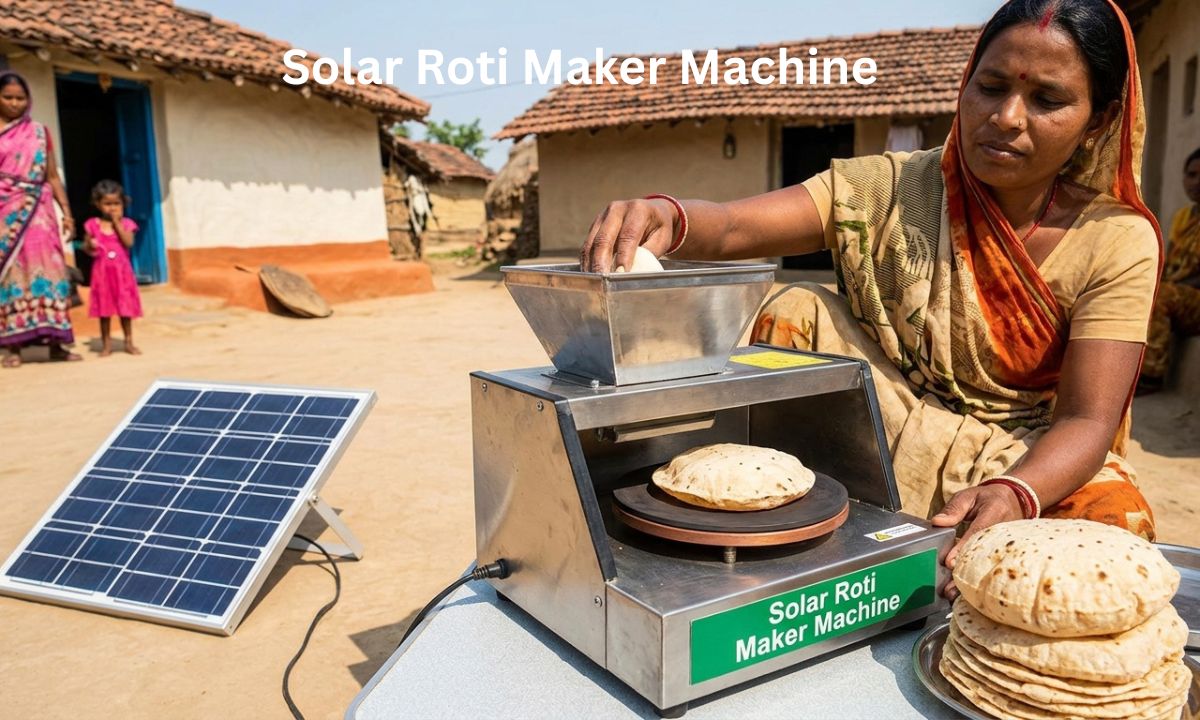
Roti making takes a lot of time every day. Many families in Pakistan now want an easy way to cook rotis at home. A solar roti maker machine uses solar energy instead of gas or electricity. This helps you save money and time in the kitchen.
Gas prices keep going up in Pakistan. Many homes also face load-shedding problems. A solar roti maker works well during power cuts. It runs on solar power, so you don’t worry about gas or electricity bills.
In this guide, I will share the latest prices of solar roti makers in Pakistan. I will also explain which models are best for your home. You will learn about features, quality, and where to buy one. This will help you make a smart choice.
What Is a Solar Roti Maker Machine?
A solar roti maker machine is a kitchen device that makes soft, round rotis in a few minutes. You place a small ball of dough inside, close the lid, and press a button. The machine presses and cooks the dough at the same time.
Most machines sold as “solar roti makers” in Pakistan run on normal electricity. The word “solar” is often used as a brand name, not because the machine has solar panels attached. Some sellers do offer a solar-compatible version. This version can run on a home solar system through an inverter. It does not have a built-in solar panel.
This point is important. Many buyers get confused here. Before you buy, always ask the seller one clear question: “Does this run on a solar inverter, or does it have a solar panel attached?” Most of the time, the answer is that it runs on your home solar setup like any other electric appliance.
Why People in Pakistan Want a Solar Roti Maker
Pakistan has two big kitchen problems these days. Gas pressure is low in most cities during winter. Load shedding also hits many areas for hours every day. A solar-powered roti maker solves both problems at once.
Here are the main reasons families are buying these machines:
- No gas needed – you don’t wait for low gas pressure to cook roti
- Works during loadshedding – if you have solar panels and batteries, roti making does not stop
- Saves time – one roti cooks in 30 to 90 seconds
- Easy for elderly people – no bending over a hot stove or tava
- Good for students and bachelors – simple to use, no cooking skill needed
- Safer for kids – less chance of burns compared to an open flame
Solar Roti Maker Machine Price in Pakistan 2026 – Quick Overview
Here is the current price range based on the Pakistani market as of 2026. Prices change with the dollar rate, brand, and size, so always check with the seller before ordering.
| Roti Maker Type | Price Range (PKR) |
| Basic manual roti press | Rs. 4,500 – Rs. 7,500 |
| Standard electric roti maker | Rs. 8,000 – Rs. 15,000 |
| Solar-compatible electric roti maker | Rs. 12,000 – Rs. 20,000 |
| Branded automatic roti maker (Westpoint, Anex, etc.) | Rs. 13,000 – Rs. 20,000 |
| Commercial-size roti maker | Rs. 20,000 and above |
Most home users in Pakistan are paying somewhere between Rs. 12,000 and Rs. 18,000 for a good solar-compatible roti maker with a 1-year warranty.
Solar Roti Maker Price by City
Prices don’t change much from city to city, but shipping costs and local dealer margins can make a small difference. Here is a general idea:
| City | Average Price (PKR) |
| Lahore | Rs. 12,000 – Rs. 19,000 |
| Karachi | Rs. 12,500 – Rs. 19,500 |
| Islamabad / Rawalpindi | Rs. 13,000 – Rs. 20,000 |
| Faisalabad | Rs. 12,000 – Rs. 18,500 |
| Multan | Rs. 12,000 – Rs. 18,000 |
| Peshawar | Rs. 12,500 – Rs. 19,000 |
Pro tip: If you live in a small city or town, online sellers often charge extra for delivery. Always ask, “Is delivery free, or is it added on top of this price?” before you confirm the order.
Types of Solar Roti Makers Available in Pakistan
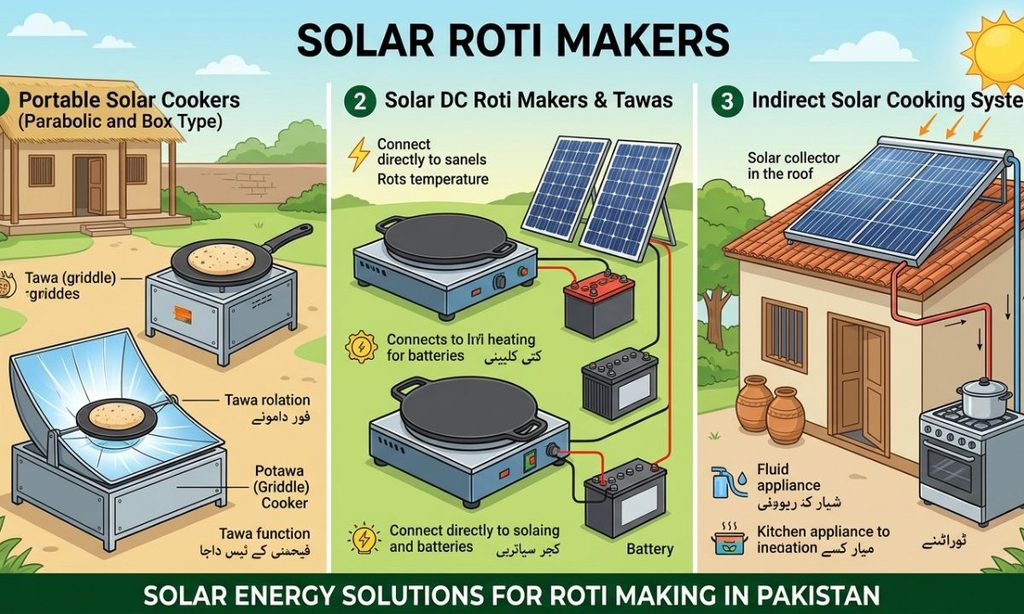
1. Manual Roti Press
This is the cheapest option. You place the dough, close the lid, and press down with your hand. There is no motor and no heating plate control. It is more like a rolling tool than a cooking machine.
It does not use electricity or solar power at all, so it is not a true “solar” product, but shops sometimes list it under this name because it saves gas.
2. Electric Roti Maker (Solar-Compatible)
This is the most popular type. It has two heating plates. The dough goes in the middle, the lid closes, and both sides cook the roti evenly. These machines usually run on 600 to 1000 watts. If your solar inverter can handle this load, the machine will work fine on solar power during the day.
3. Automatic Roti Maker
This type has extra features like a timer, indicator lights, and sometimes a non-stick coating that lasts longer. Brands like Westpoint, Anex, and Geepas make automatic models. These cost more but are more durable.
4. Commercial Roti Maker
These are large machines built for hotels, restaurants, and langar (community kitchen) use. They can make hundreds of rotis per hour. They need a bigger power supply, so a home solar system usually cannot run these unless it’s a large commercial solar setup.
Solar Roti Maker vs Traditional Tava (Comparison Table)
| Feature | Solar Roti Maker | Traditional Tava (Gas) |
| Power source | Electricity / solar inverter | Gas cylinder or gas line |
| Time per roti | 30–90 seconds | 2–3 minutes |
| Skill needed | Very low | Medium to high |
| Works in loadshedding | Yes (with solar/battery) | Yes (if gas is available) |
| Works in low gas pressure | Yes | No |
| Safety | Safer, no open flame | Risk of burns |
| Roti shape | Always round | Depends on skill |
| Initial cost | Higher | Lower |
What Affects the Price of a Solar Roti Maker?
Not every roti maker is priced the same. Here is what changes the price:
Brand name: Known brands like Westpoint, Anex, and Panasonic usually cost more than local, unbranded machines. You pay extra for warranty and quality control.
Wattage: A machine with lower wattage costs less but takes longer to cook. Higher wattage machines cook faster but need a bigger solar inverter to run smoothly.
Plate size: Bigger plates make bigger rotis. A 10-inch plate machine is usually cheaper than a 12-inch one.
Body material: Steel-body machines cost more than plastic-body machines. Steel also lasts longer and handles heat better.
Non-stick coating quality: A good non-stick coating means the roti does not stick, and cleaning is easy. Cheap coatings wear off after a few months and need replacement.
Warranty period: A machine with a 2-year warranty will always cost more than one with no warranty or a 6-month warranty.
Import cost and dollar rate: Many parts of these machines are imported. When the dollar rate goes up, roti maker prices in Pakistan also go up.
How to Choose the Right Solar Roti Maker for Your Home
Here is a simple step-by-step approach based on what actually matters for daily use in a Pakistani household.
Step 1: Check Your Family Size
- 2–4 members: a basic 600–800 watt machine is enough
- 5–8 members: go for an 800–1000 watt automatic machine
- Joint family or guests often: consider a slightly bigger, branded model
Step 2: Match It to Your Solar System
Before buying, check your inverter capacity and battery backup. A 1000-watt roti maker running for even 10 minutes uses real power. If your solar setup is small, choose a lower-wattage machine, or plan to use the roti maker mainly during sunny hours when solar production is highest.
Step 3: Check the Plate Coating
Ask the seller if the plates are non-stick coated and how long the coating is expected to last. A good coating should handle daily use for at least 1 to 2 years.
Step 4: Compare Warranty Terms
A machine with at least 6 months to 1-year warranty is a safer buy. Ask what the warranty covers — some sellers only cover the motor, not the heating plates.
Step 5: Read Real Buyer Reviews
Before ordering online, check the reviews on the seller’s page. Look for comments about how long the machine lasted, not just how well it worked on day one.
Automatic Solar Roti Maker Price in Pakistan 2026
An automatic solar roti maker is a step up from the basic manual roti press. It has a built-in timer, heat control, and sometimes an indicator light that tells you when the roti is ready. You just place the dough and press start. The machine does the rest on its own.
These machines are called “solar” because they can run through a home solar inverter system. Most of them do not have a solar panel attached directly to the machine. If you already have solar panels for your home, this machine can easily run on that power during the day.
In Pakistan, automatic solar roti makers cost a bit more than basic manual ones. The price depends on brand, wattage, and plate size. Branded automatic models from companies like Westpoint and Anex sit at the higher end, while local automatic models are cheaper but may have a shorter warranty.
| Automatic Solar Roti Maker Type | Price Range (PKR) |
| Local automatic (unbranded) | Rs. 12,000 – Rs. 15,000 |
| Mid-range automatic (Anex, Sinbo) | Rs. 14,000 – Rs. 18,000 |
| Branded automatic (Westpoint, Geepas) | Rs. 16,000 – Rs. 20,000 |
| Large-plate automatic (12-inch+) | Rs. 18,000 – Rs. 22,000 |
Real Experience: What I Learned From Using and Testing These Machines
I have handled solar setups and kitchen appliances for many families in Punjab, and I want to share a few honest, practical points that most articles don’t tell you.
First, the “solar” label on most roti makers in local markets is a marketing term. The machine plugs into your normal socket. It only becomes “solar” when that socket is connected to your home’s solar inverter system. So don’t expect a built-in solar panel on top of the machine — that is very rare and usually a custom or costly setup.
Second, wattage matters more than people think. A family bought a 1200-watt automatic roti maker with a small 1000-watt solar inverter. The machine kept tripping the inverter every time it started heating. They had to return it and buy an 800-watt model instead. Always check your inverter’s rated wattage before choosing a machine.
Third, the first roti or two often come out uneven while the plates reach full temperature. This is normal. Don’t judge the machine’s quality from the first roti of the day.
Fourth, cleaning right after use is the real secret to making these machines last. If dough dries on the plates, it becomes hard to remove and can damage the non-stick coating over time. A damp cloth right after use, once the machine has cooled a bit, keeps it working well for years.
Maintenance Tips to Make Your Roti Maker Last Longer
- Always let the machine cool down before cleaning
- Use a soft cloth, never a metal scrubber, on non-stick plates
- Do not use excess oil or ghee on the plates unless the manual allows it
- Store the machine in a dry place, away from moisture
- Check the power cord regularly for any damage
- Avoid overloading the dough ball size — follow the machine’s suggested portion size
- If connected to solar, avoid running it during cloudy days if your battery backup is low
Is a Solar Roti Maker Worth Buying in 2026?
For most Pakistani households dealing with gas shortages and load shedding, the answer is yes. The upfront cost is higher than a normal tava, but the daily convenience and time saved make it worthwhile, especially for working women, students living alone, and elderly people who struggle with traditional cooking methods.
If your home already has a solar system for lights and fans, adding a roti maker to that setup is a smart move. It uses power mainly during the day when the sun is out, which is exactly when solar systems produce the most electricity. This lines up well with typical roti-making times for lunch and dinner preparation.
If you don’t have a solar system yet, a roti maker can still run on normal electricity or a UPS during short loadshedding periods. You don’t need to wait until you install solar panels to enjoy the convenience of one of these machines.
Final Thoughts
Choosing the right solar roti maker comes down to three things: your family size, your power setup, and your budget. A basic machine around Rs. 12,000 works well for small families, while a branded automatic model closer to Rs. 18,000 to Rs. 20,000 suits bigger households or those who want extra durability.
Prices in Pakistan shift with the dollar rate and import costs, so it’s always smart to compare two or three sellers before placing an order. Ask about warranty terms clearly, and confirm whether the machine truly supports solar/inverter use or simply runs on standard electricity.
With the right machine and a properly matched solar setup, making soft, round rotis becomes a quick daily task instead of a long chore, even on days when gas pressure is low or the power goes out.
“FAQs”
Can I buy a solar roti maker machine?
Yes, you can easily buy one online or from local electronics markets in Pakistan. Just confirm with the seller whether it runs on a solar inverter or standard electricity.
What is the price of a solar roti maker machine in Pakistan?
Prices range from Rs. 12,000 to Rs. 20,000 depending on brand and features. Automatic and branded models cost more than basic local ones.
Which roti maker is best for home?
An automatic electric roti maker with non-stick plates works best for most homes. It cooks evenly and is easy to clean daily.
How much does a roti maker machine cost?
A basic roti maker starts around Rs. 4,500, while automatic models go up to Rs. 20,000. Price depends on brand, wattage, and plate size.
What is the price of an electric roti maker in Pakistan?
Electric roti makers usually cost between Rs. 8,000 and Rs. 18,000. Branded automatic versions sit at the higher end of this range.
Is it worth buying a roti maker?
Yes, it saves time and works well during gas shortages or loadshedding. It’s especially useful for busy families, students, and elderly users.
What are the disadvantages of roti maker?
It needs electricity or solar power to run, so it won’t work during a total power cut. Some cheaper models also have coatings that wear off quickly.
Is there an instant roti maker machine available?
Yes, automatic roti makers cook a roti in about 30 to 90 seconds. They’re widely available in Pakistan both online and in stores.
Does roti maker consume more electricity?
It uses moderate power, usually 600 to 1000 watts, similar to a small heater. Running it for a few minutes daily doesn’t add much to your bill.

I AM CH SAMI ULLAH, THE TOP SOLAR PANEL SELLER AND INSTALLER IN PAKISTAN, WITH CHEAPEST RATES, OF TOP QUALITY. GET THE LATEST RATES ON SOLAR PANELS, FANS, ACs, TUBE WELLS, SOLAR FRIDGES, AND SOLAR ATTA CHAKKIS. WHATSAPP (03461320821)