
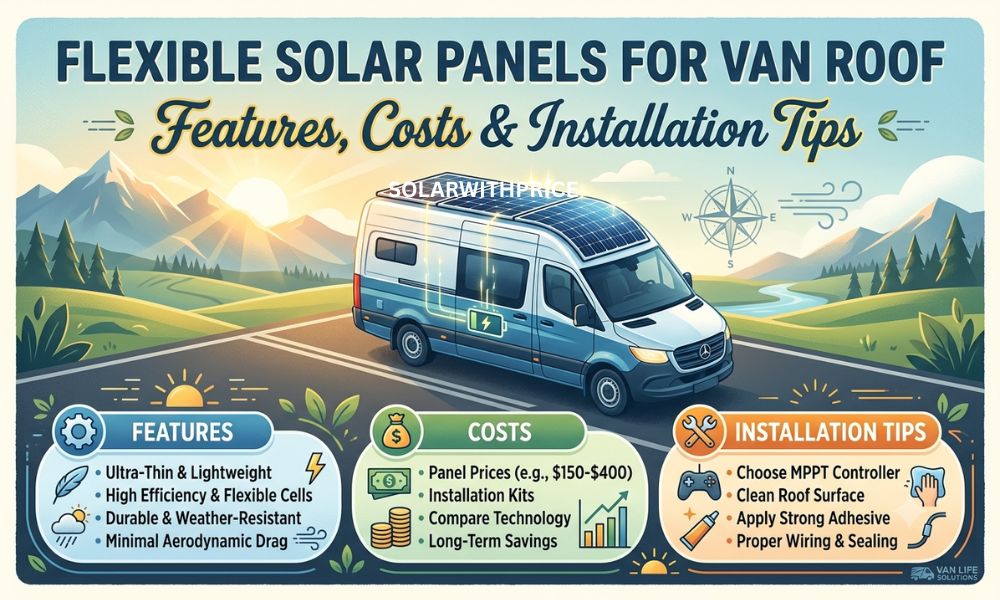
It is very informative news that choosing the right solar panel for your van roof can make or break your off-grid power setup in 2026. These Flexible solar panels have become a favorite among van builders because they bend to fit curved roofs, weigh a fraction of rigid panels, and skip the drilling altogether nowadays.
It is also important that converting a van into a home on wheels means rethinking how you generate power, and the roof is where that journey usually starts. Flexible solar panels have become the go-to choice for van lifers who want clean energy without the weight, bulk, or drilling headaches that come with traditional rigid panels in 2026.
This guide walks you through everything you need to know before buying, from ETFE versus PET laminate to bend ratings and cell types. We’ll also cover the installation steps that actually keep these panels running for years instead of failing within a season.
What Are Flexible Solar Panels?
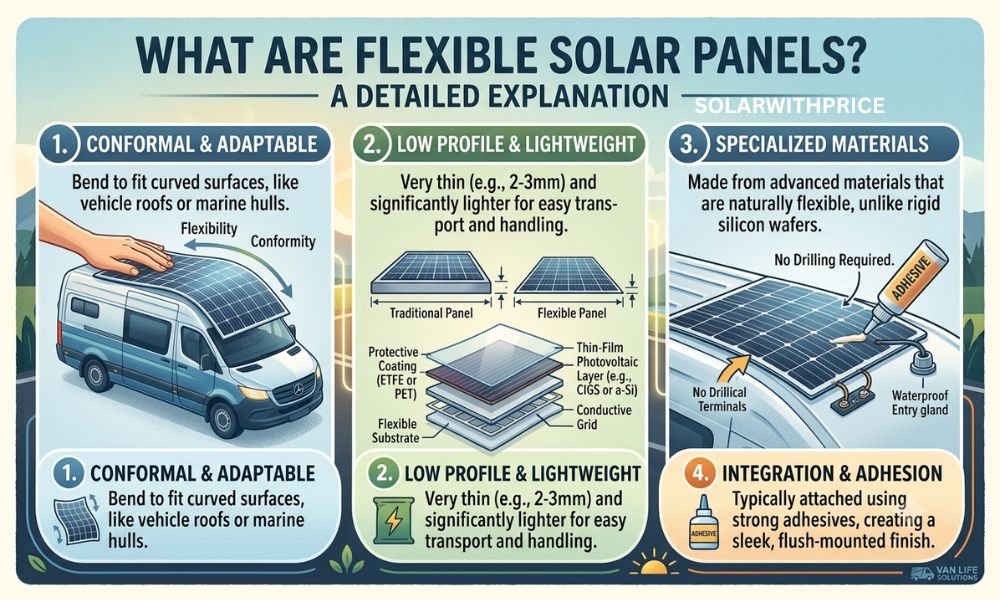
It is very informative news that Flexible solar panels are thin, lightweight photovoltaic panels designed to bend and conform to curved or irregular surfaces in 2026.
Unlike rigid solar panels, which use tempered glass and aluminum frames, flexible panels use thin laminate materials like ETFE (Ethylene Tetrafluoroethylene) or PET (Polyethylene Terephthalate) to encase the solar cells.
It is also important to note that this construction makes them ideal for van roofs that aren’t perfectly flat.
My personal experience: Many vans, including Sprinters, Transits, and ProMasters, have subtle curves, ridges, or corrugations that rigid panels simply can’t sit flush against.
How Flexible SOLAR Panels Differ From Rigid Panels
| Feature | Flexible Panels | Rigid Panels |
| Weight | 3–13 lbs per panel | 25–50 lbs per panel |
| Thickness | 0.08–0.15 inches | 1.4 inches or more |
| Efficiency | 16–22% (up to 25% for premium TOPCon) | 20–24% |
| Lifespan | 10–15 years (up to 20 with ETFE) | 25–30 years |
| Installation | Adhesive/tape, no drilling required | Brackets, usually requires drilling |
| Best for | Curved roofs, weight-sensitive builds, stealth setups | Flat roofs, maximum long-term output |
| Cost per watt | Moderate to high | Lower for large arrays |
Why Van Owners Choose Flexible Solar Panels
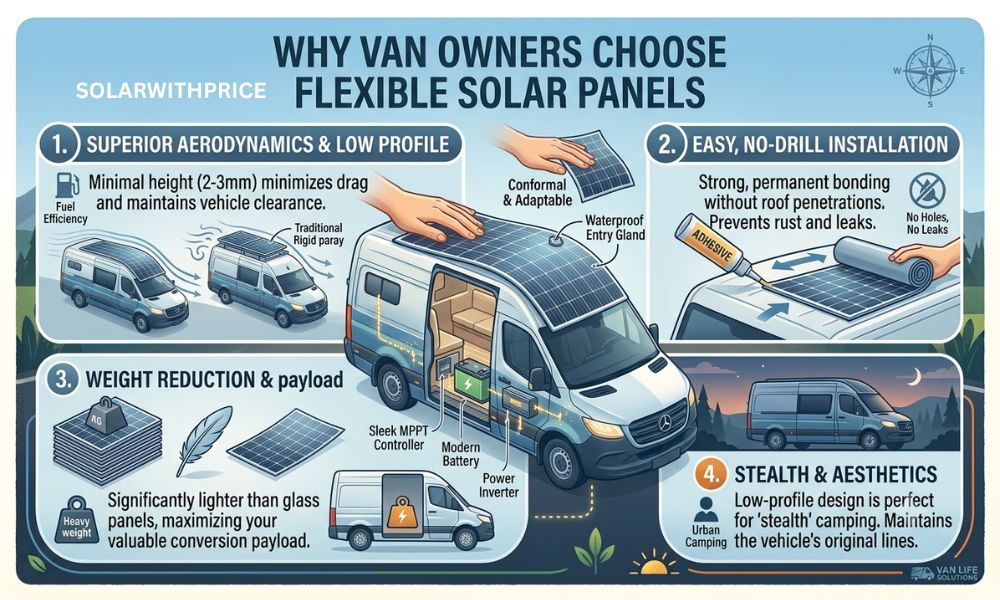
- Low profile and stealth appeal. A flush-mounted flexible panel doesn’t scream “camper van,” which matters for owners worried about theft or break-ins at trailheads and parking lots.
- No drilling required. Most flexible panels are bonded using VHB (very high bond) tape or marine-grade sealant, which means fewer holes in your roof and a lower risk of leaks.
- Significant weight savings. Shaving 20–40 pounds off your roof load improves fuel efficiency and keeps your van’s center of gravity lower.
- Curve-conforming design. Vans with rounded roof panels or pop-tops often can’t accommodate rigid panels at all.
- Easier for solo installers. Lighter panels are far easier to lift, position, and secure without a second person.
My personal experience: Always install the best quality solar panels to get more electricity for longer life.
The Trade-Offs You Should Know
Flexible solar technology isn’t perfect, and most top buying guides agree on the same drawbacks.
- Shorter lifespan. Flexible panels typically last 10–15 years, compared with 25–30 years for rigid glass panels, mainly because ETFE or PET laminates degrade faster than tempered glass.
- Heat buildup. Bonding a panel flush to a metal roof with no air gap can reduce output by up to 20% on hot days. Heat is the single biggest factor shortening a flexible panel’s working life.
- Lower efficiency on cheaper models. Budget PET-coated panels can lose 30–50% of their output within 5–8 years, while ETFE panels with proper ventilation hold up far better.
- No foot traffic on most models. Unless you buy a panel specifically rated as “walkable,” stepping on a standard flexible panel can crack the cells.
Flexible Solar Panel Materials: ETFE vs PET
The laminate material used on a flexible panel determines how long it survives on your van roof.
| Material | UV Resistance | Heat Tolerance | Typical Lifespan | Price |
| ETFE | Excellent | Withstands 130°C+ | 15–20 years | Higher |
| PET | Moderate | Yellows/degrades faster | 3–8 years | Lower |
My personal experience: If you’re investing in a permanent van build, ETFE-laminated panels are worth the extra cost. PET panels are better suited to temporary or budget setups where replacement is expected within a few years.
Cell Technology: Monocrystalline, PERC, and Thin-Film
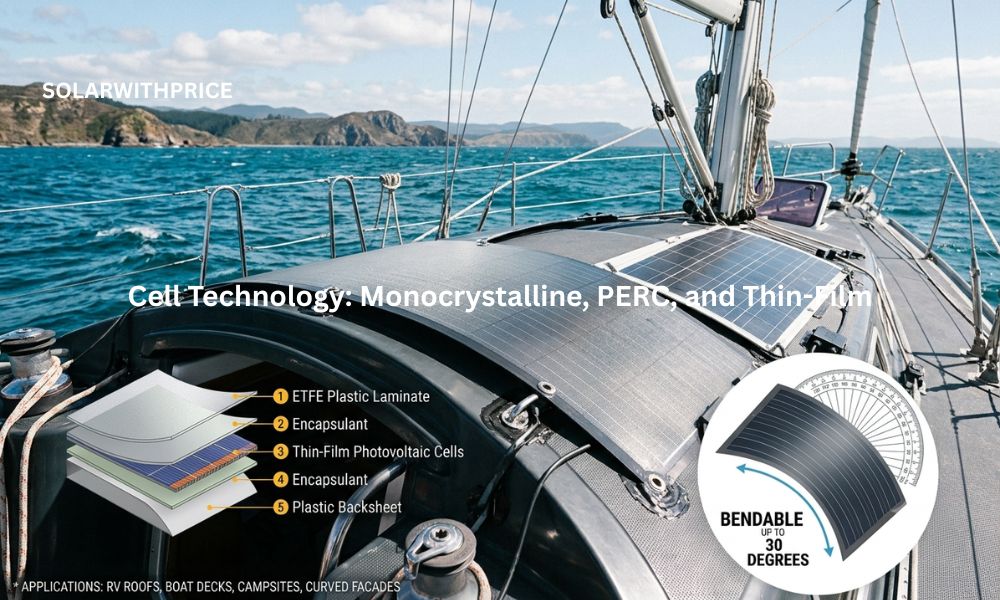
- Monocrystalline (PERC/TOPCon): The most common choice for van roofs, offering 18–25% efficiency depending on cell grade. TOPCon cells are the newer standard, performing better in low light and partial shade.
- Thin-film (CIGS): Made from copper indium gallium selenide, these panels can bend up to 360 degrees and perform well in shade, but typically deliver lower watt-per-square-foot output.
- Bifacial flexible panels: Capture light from both sides, though van roofs rarely provide enough reflected light underneath to make this technology worthwhile.
My pro tip: For most van conversions, monocrystalline flexible panels with TOPCon or PERC cells offer the best balance of efficiency, durability, and price.
How Much Flexible Solar Power Does a Van Need 2026?
Sizing your system depends on your appliances, battery bank, and how often you’ll be off-grid.
| Van Setup | Recommended Wattage | Typical Battery Bank |
| Weekend camper, basic lighting/phone charging | 100W | Under 100Ah |
| Mid-size build with fridge, fan, laptop | 150–200W | 100–200Ah |
| Full-time van life, multiple appliances | 300–400W+ | 200–400Ah |
My personal experience: As a rule of thumb, one 100–200W flexible panel can comfortably support a small fridge, lighting, and device charging. Full-time travelers running induction cooktops or larger fridges typically need 300W or more.
Step-by-Step: Installing Flexible Solar Panels on a Van Roof
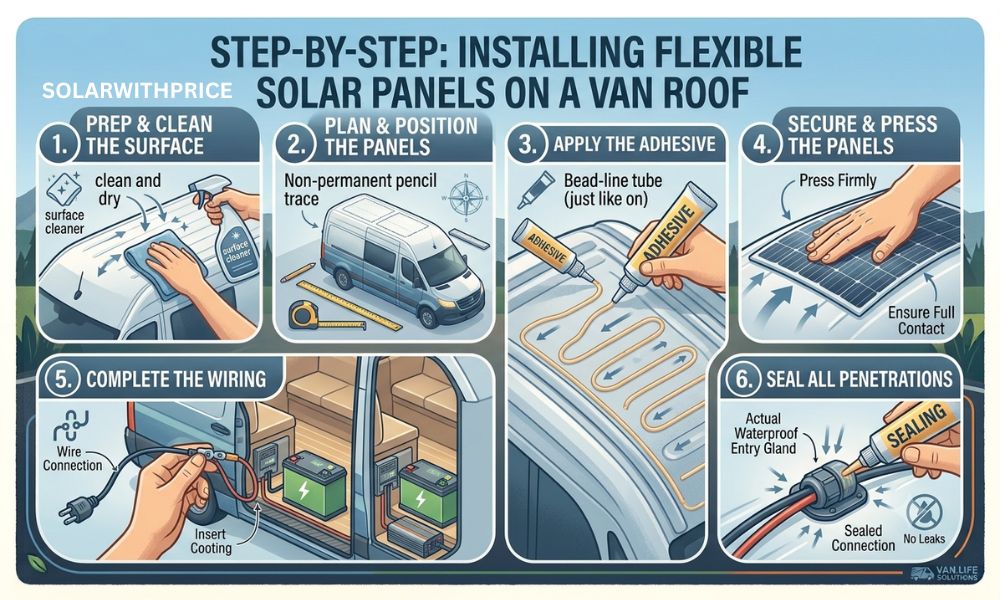
1. Measure and Plan Your Layout
Map out your roof space first, noting the position of vents, roof fans, antennas, and any curved sections. Mark shaded zones, since even partial shade can significantly cut output if panels are wired in series.
2. Clean the Roof Surface
Wash and degrease the mounting area thoroughly. Any dirt, wax, or residue will weaken the adhesive bond and shorten the panel’s working life.
3. Create an Air Gap
Mounting panels flush against a hot metal roof is one of the most common installation mistakes. A small air gap — even using thin spacer strips, foam tape, or a corrugated backing board — helps dissipate heat and can preserve 10–20% more output on sunny days.
4. Bond the Panel
Use marine-grade VHB tape or a sealant like Sikaflex around the edges. Avoid drilling unless the panel includes reinforced grommet holes specifically designed for screws.
5. Route and Seal the Wiring
Run MC4 connector cables to a sealed cable entry gland, then down to your charge controller. Seal every penetration point carefully to prevent water ingress.
6. Connect to an MPPT Charge Controller
Flexible panels perform best with an MPPT (Maximum Power Point Tracking) controller, which extracts more usable power than a standard PWM controller, especially in partial shade or variable sunlight.
Best Mounting Methods Compared
| Mounting Method | Drilling Required | Best For | Durability |
| VHB adhesive tape | No | Curved roofs, no-drill builds | High if installed correctly |
| Sealant (Sikaflex) | No | Permanent installs | Very high |
| Grommets + screws | Yes (minimal) | Panels prone to wind lift | Highest |
| Roof rack mounting | Yes (rack only) | Flat sections, easy removal | High |
Common Mistakes to Avoid When Buying Flexible Solar Panels
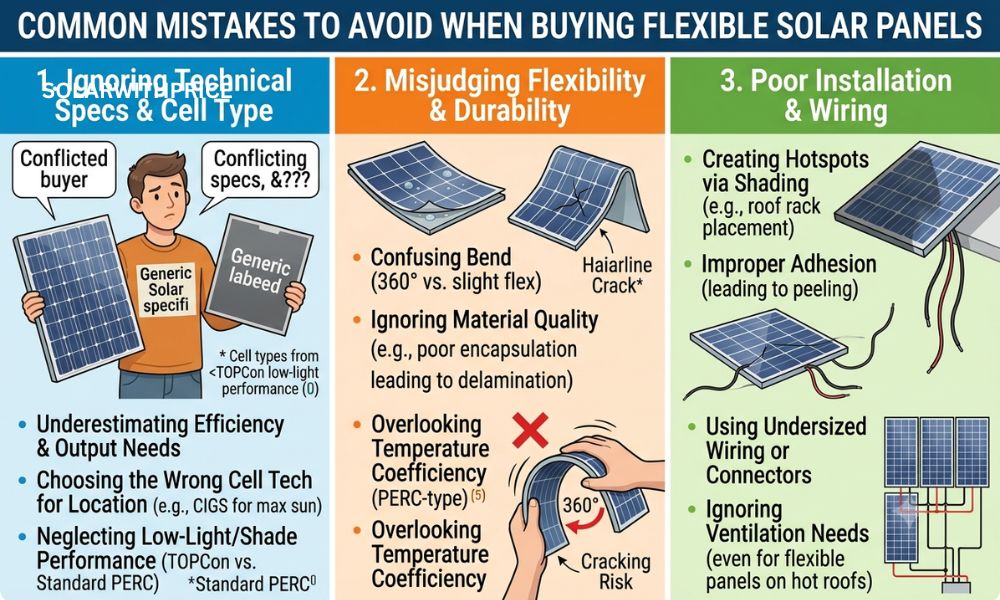
- Skipping the air gap and bonding panels directly to a hot roof
- Choosing cheap PET panels for a permanent build expecting ETFE-level lifespan
- Wiring panels in series when one will regularly be shaded
- Forgetting to size the charge controller to the panel’s open-circuit voltage
- Ignoring the panel’s bend radius — forcing an insufficiently flexible panel onto a tight curve creates stress points that crack cells over time
Top Considerations When Buying Flexible Solar Panels
When comparing flexible solar panels for your van roof, prioritize:
- ETFE laminate over PET for longevity
- Bypass diodes for better shade tolerance
- A warranty of at least 10 years — short warranties usually signal lower-quality lamination
- Bend radius rating that matches your actual roof curve
- Cell type — TOPCon or PERC monocrystalline for the best efficiency-to-cost ratio
Conclusion
Flexible solar panels have genuinely changed what’s possible for van-based off-grid power. They let you mount solar on curved, irregular, or weight-sensitive roofs without drilling, without adding significant weight, and without the bulky look of rigid arrays. The trade-off is a shorter lifespan and a real need for proper heat management during installation.
If you choose ETFE-laminated, monocrystalline panels with bypass diodes, install them with an air gap, and pair them with an MPPT controller, you can expect 10–15 years of reliable power for your van build. Take the time to measure your roof, plan your layout around shade sources, and invest in quality materials — the panel itself is only half the equation; installation quality determines how long it actually lasts.
FAQs
Are flexible solar panels good for van roofs?
Yes, they conform to curved and irregular van roofs, weigh significantly less than rigid panels, and install without drilling.
How long do flexible solar panels last on a van?
Most quality ETFE flexible panels last 10–15 years, while cheaper PET panels often degrade within 3–8 years.
Can you walk on flexible solar panels?
Only panels specifically rated as “walkable” can handle foot traffic; standard flexible panels can crack under regular pressure.
Do flexible solar panels need an air gap?
Yes, an air gap helps dissipate heat and can prevent up to 20% output loss on hot days when panels are mounted flush to the roof.
What’s the best way to mount flexible panels without drilling?
VHB adhesive tape combined with a marine sealant like Sikaflex creates a strong, drill-free bond suitable for most van roofs.
How many watts of solar do I need for a van?
A 100W panel suits basic weekend use, while full-time van life with a fridge and multiple appliances typically needs 300W or more.
Are flexible panels less efficient than rigid panels?
Yes, flexible panels typically run 16–22% efficiency compared to 20–24% for rigid panels, though premium TOPCon models can reach 25%.
What is better, ETFE or PET flexible panels?
ETFE offers superior UV resistance and heat tolerance, lasting 15–20 years, while PET is cheaper but degrades within a few years outdoors.

I AM CH SAMI ULLAH, THE TOP SOLAR PANEL SELLER AND INSTALLER IN PAKISTAN, WITH CHEAPEST RATES, OF TOP QUALITY. GET THE LATEST RATES ON SOLAR PANELS, FANS, ACs, TUBE WELLS, SOLAR FRIDGES, AND SOLAR ATTA CHAKKIS. WHATSAPP (03461320821)