
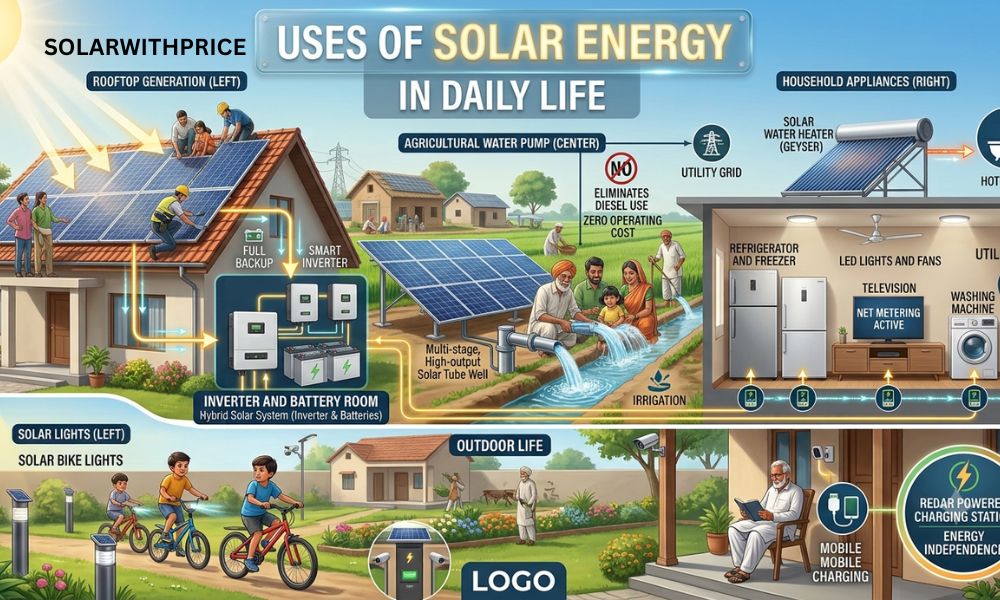
Solar energy has become a daily part of life for people across Pakistan in 2026. Homes now run lights, fans, fridges, and even air conditioners on solar power, cutting WAPDA bills by half or more. Farmers use solar water pumps for tube wells and solar dryers for crops, removing the need for costly diesel. Shopkeepers are also switching to solar atta chakki to avoid generator fuel costs and frequent load shedding.
Beyond big appliances, solar power is showing up in smaller everyday tools too. Solar water heaters save on gas bills in winter, while solar street lights are lighting up housing societies and village roads without extra wiring. Solar power banks help people stay connected during outages, and solar washing machines and fridges are becoming common in homes that want lower electricity bills.
Overall, solar energy in 2026 ranges from full home systems worth PKR 350,000 to 1,300,000 to small portable chargers anyone can afford. Whether it’s a farmer in rural Punjab or a family in Lahore, solar power now offers a practical way to save money and stay reliable during load shedding.
What Is Solar Energy?
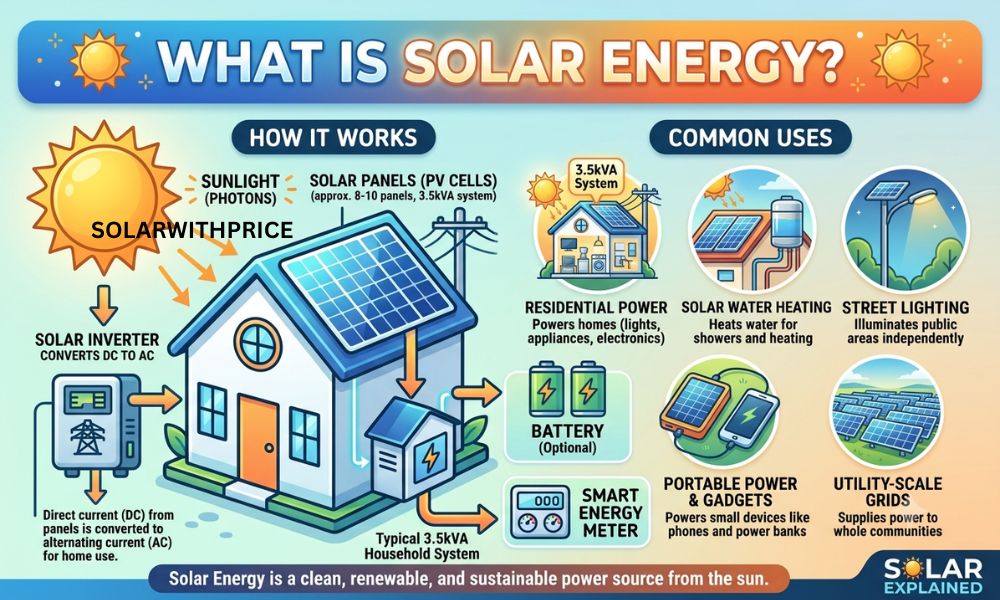
Solar energy is the light and heat that comes from the sun. We can catch this energy using solar panels (also called PV panels) or solar thermal collectors. Panels turn sunlight into electricity. Thermal collectors turn sunlight into heat, which can warm water or air.
Solar energy is:
- Free once the system is installed
- Clean, with no smoke or harmful gases
- Renewable, meaning it never runs out
- Low maintenance, needing only occasional cleaning
Now let’s look at the top 10 ways people use this energy every day.
Top 10 Uses of Solar Energy in Daily Life 2026
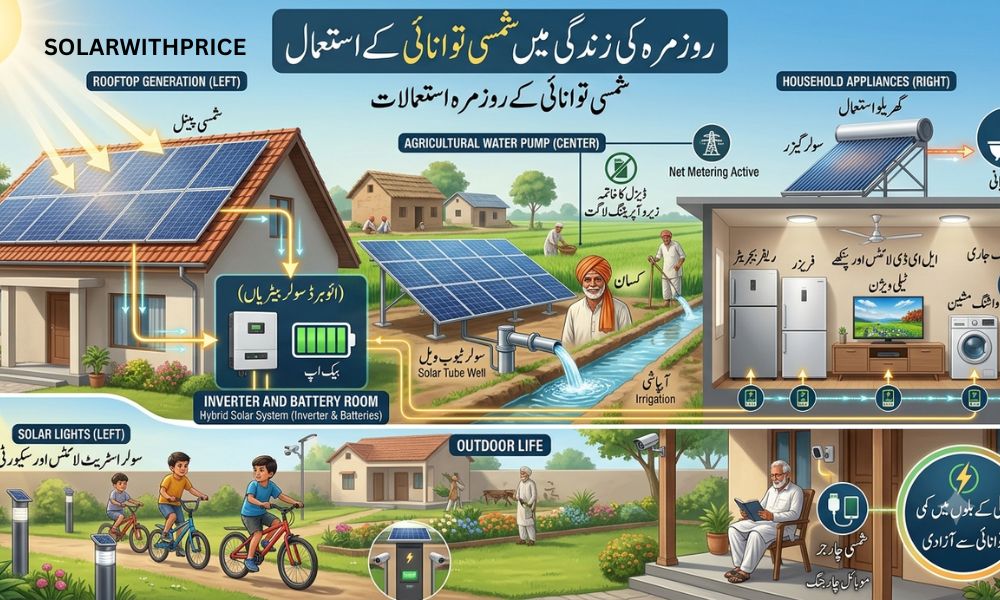
1. Generating Electricity for Homes
This is the most common and most important use of solar power. Solar panels on the roof catch sunlight and turn it into DC electricity. An inverter then changes this into AC power, which runs your fans, lights, fridge, and other appliances.
Why people choose it:
- Cuts your monthly electricity bill
- Reduces load on the main grid
- Works well with a battery for night-time backup
2. Heating Water at Home
Solar water heaters are one of the oldest and simplest solar uses. A dark panel on the roof absorbs heat from the sun. This heat passes into water stored in a tank, giving you warm water for bathing, washing dishes, and laundry without using gas or electricity.
| Feature | Solar Water Heater | Electric Geyser |
| Running Cost | Almost free after setup | Adds to electric bill |
| Best For | Sunny regions | Any region |
| Maintenance | Very low | Moderate |
3. Powering Outdoor and Indoor Lighting
Solar lighting is everywhere now — streetlights, garden lights, and porch lights. A small panel charges a battery during the day. When the sun sets, a sensor turns the light on automatically. No wiring, no extra electricity bill.
Common places you’ll find solar lights:
- Street and road lighting
- Garden and pathway lights
- Security lights with motion sensors
- Indoor rooms connected to a home solar system
4. Running Solar Water Pumps for Farms
Farmers use solar water pumps to draw water from wells, canals, or tube wells. This removes the need for diesel-powered pumps, which cost a lot to run. A solar tube well can water crops all day using nothing but sunlight.
Benefits for farmers:
- No diesel expense
- Less noise and pollution
- Works well in remote farmland without grid power
5. Charging Batteries for Backup Power
Solar systems paired with batteries let you store extra power made during the day. This stored power keeps your lights, fans, and small appliances running after sunset or during a power cut. It is one of the biggest reasons families choose solar in areas with frequent load-shedding.
6. Solar Cooking
Solar cookers use mirrors or reflective surfaces to focus sunlight onto a small area, creating enough heat to cook food, boil water, or bake bread. No gas cylinder, no electricity, and no smoke. It’s a simple, low-cost way to prepare meals, especially in areas where cooking fuel is expensive.
7. Charging Mobile Phones and Small Gadgets
Small foldable solar chargers and solar power banks let you charge phones, tablets, and cameras anywhere. These are handy during travel, camping, or power outages, and many rural households now use them as their main charging source.
8. Solar-Powered Ventilation and Cooling
Solar attic fans and ventilation systems pull hot air out of your home using nothing but a small solar panel. This lowers indoor temperature in summer and reduces the load on your air conditioner, saving electricity.
9. Powering Electric Vehicles and E-Bikes
Solar charging for electric cars, bikes, and scooters is growing fast. Homes with rooftop solar can charge an EV using power generated during the day, making daily commuting cheaper and cleaner. Some buses and boats now even carry small solar panels to power onboard systems.
10. Solar Energy in Industry and Business
Factories, cold storage units, and warehouses are switching to solar power to run machinery, lighting, and refrigeration. This lowers operating costs and reduces dependence on the grid, especially in industries like textiles, food processing, and pharmaceuticals.
Quick Comparison: Top Solar Uses at a Glance 2026
| Use | Best For | Main Benefit |
| Home electricity | Every household | Lower electricity bill |
| Water heating | Bathing, laundry | Free hot water |
| Lighting | Streets, gardens, homes | No wiring needed |
| Water pumps | Farms, agriculture | No diesel cost |
| Battery backup | Areas with load-shedding | Power during outages |
| Cooking | Homes, rural areas | No gas needed |
| Device charging | Travel, daily use | Portable power |
| Ventilation | Hot climates | Cooler home |
| EV charging | Car and bike owners | Cheap fuel alternative |
| Industry | Factories, warehouses | Lower operating cost |
Secret Benefits of Using Solar Energy in Daily Life 2026
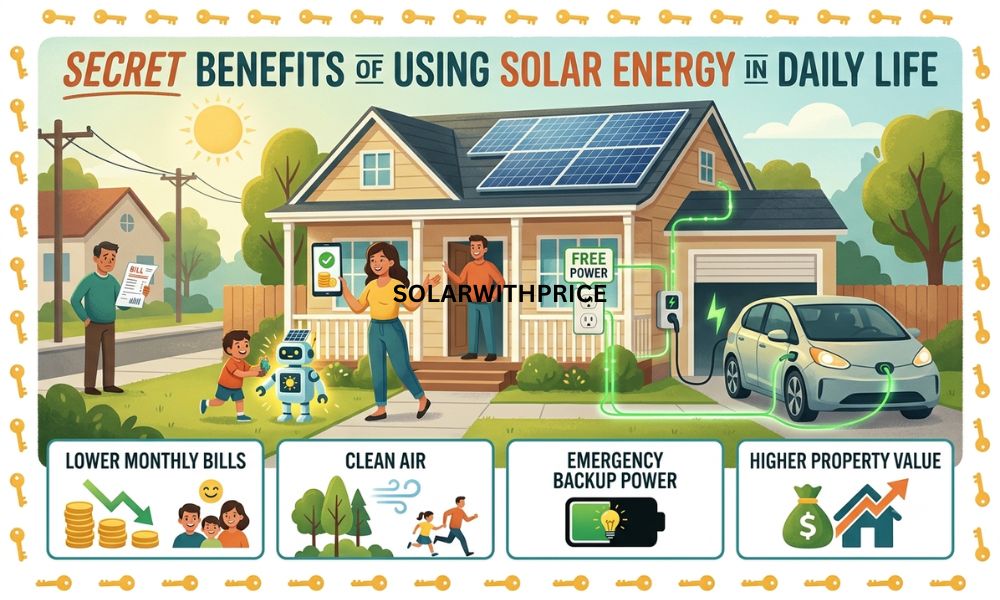
- Saves money on electricity bills every month
- Clean energy with no smoke or harmful emissions
- Reliable backup during power cuts, when paired with batteries
- Long lifespan, with most panels lasting 25 years or more
- Low upkeep, needing only occasional cleaning
- Works almost anywhere, from city rooftops to remote farms
Final words
Solar energy is no longer a luxury in Pakistan; it is now a daily need. From homes and farms to shops and small gadgets, solar power is helping families save money every month. It also keeps life running smoothly during long hours of load shedding.
Whether you need a small solar charger or a full home system, there is an option for every budget. Prices range from a few thousand rupees for small devices to over a million for complete home setups. This makes solar power accessible for both rural and urban households across Punjab.
If you are still relying only on WAPDA or diesel, now is the right time to switch. Solar energy gives you long-term savings, less dependence on the grid, and peace of mind. It is a smart investment for your home, farm, or business in 2026 and beyond.
FAQs
What are 10 uses of solar energy?
Solar energy powers homes, water pumps, air conditioners, geysers, street lights, power banks, washing machines, fridges, dryers, and flour mills. It works for both city and village life. It saves money and reduces load shedding problems.
What are the uses of solar energy Class 7?
At this level, students learn that solar energy is used for lighting homes, heating water, and running small machines. It is also used in solar cookers and solar water pumps. Solar energy helps save fuel and electricity.
What are the uses of solar energy Class 5?
Solar energy is used to give us light and heat from the sun. It helps run lights, fans, and solar cookers at home. It is a clean and free source of energy.
What is the most common use of solar energy?
The most common use of solar energy is generating electricity for homes. It powers lights, fans, fridges, and other appliances. This helps cut down electricity bills every month.

I AM CH SAMI ULLAH, THE TOP SOLAR PANEL SELLER AND INSTALLER IN PAKISTAN, WITH CHEAPEST RATES, OF TOP QUALITY. GET THE LATEST RATES ON SOLAR PANELS, FANS, ACs, TUBE WELLS, SOLAR FRIDGES, AND SOLAR ATTA CHAKKIS. WHATSAPP (03461320821)