
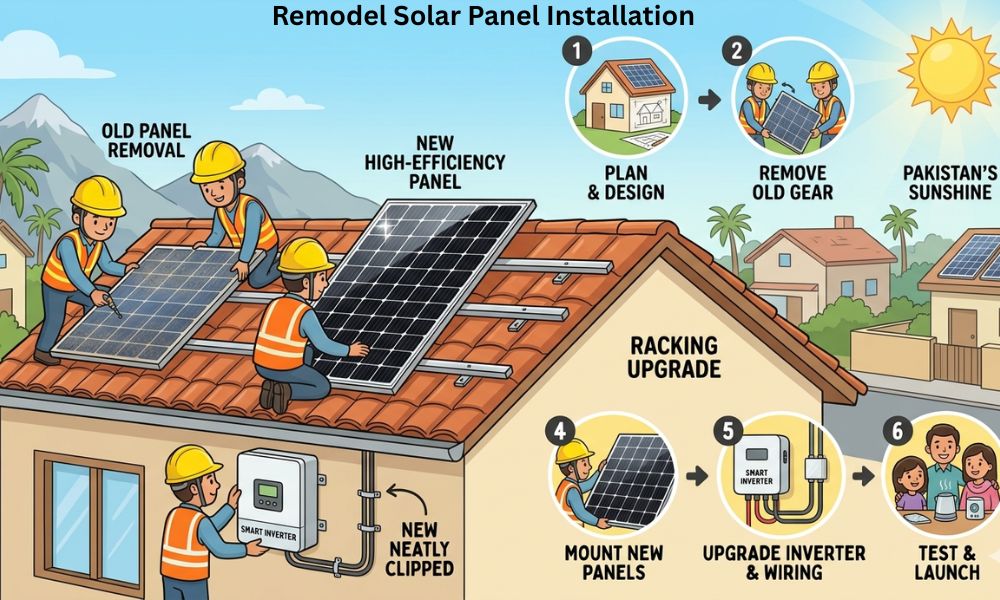
It is very informative news that Pakistan’s abundant sunshine (5–7 peak hours daily) and huge electricity challenges make solar remodelling a smart investment to save money.
A solar remodel involves upgrading or expanding an existing system, replacing ageing panels, outdated inverters, or undersized batteries, rather than starting fresh in Pakistan in 2026.
It is also important that this process begins with an energy audit, roof inspection, and existing system evaluation, followed by component selection, permits, and physical installation in Pakistan.
There are a lot of Modern monocrystalline solar panels, hybrid inverters, and lithium iron phosphate batteries that give far superior performance compared to older systems in Pakistan in 2026.
A typical 5 kW hybrid remodel costs Rs. 2,50,000–3,00,000 with a 3–5 year payback period in Pakistan nowadays. NEPRA’s net metering policy allows surplus energy export to the grid, further improving returns.
My Personal experience: Always buy the best quality appliances that cost a little bit more in Pakistan, but they last many years. For example, A-grade solar panels generate electricity for 25 years with 25% efficiency.
What Is a Solar Panel Remodel?
It is very important to note that A solar panel remodel refers to the process of upgrading, replacing, or expanding an existing solar energy system rather than starting from scratch to get more electricity.
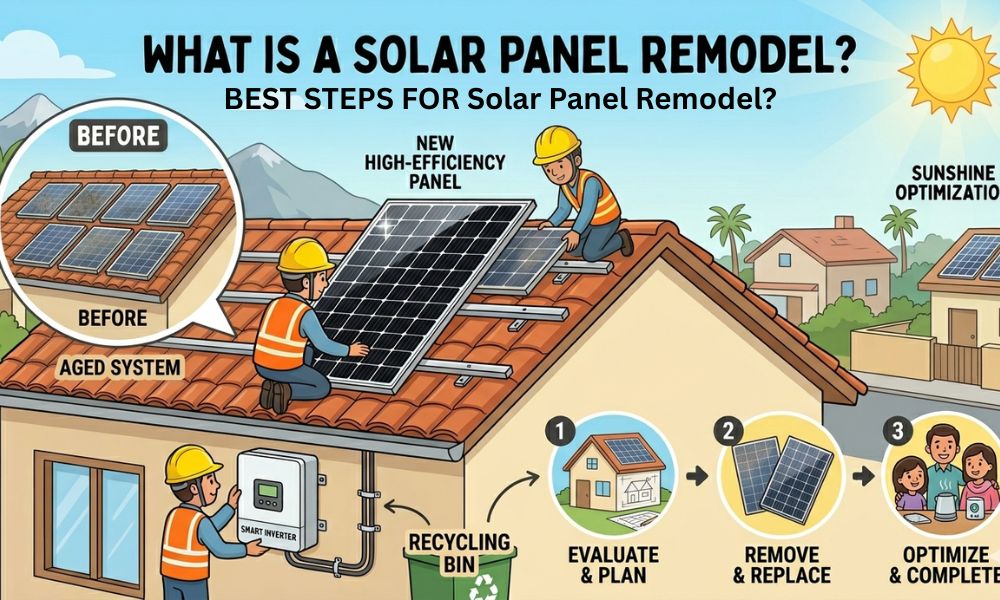
In Pakistan, thousands of early adopters who installed basic solar systems between 2012 and 2018 are now finding that their ageing solar panels, outdated inverters, or undersized battery banks no longer meet their growing power needs.
My personal experience: A remodel addresses these gaps by blending old and new components, or replacing the system entirely, to deliver greater efficiency, reliability, and capacity in Pakistan.
It is also informative news that a fresh installation or a remodel requires a thorough audit of your existing setup. The goal is to maximise your return on past investment while building a system capable of handling modern loads such as air conditioners, EV chargers, and high-wattage appliances.
Why Pakistan Needs Solar Panel Remodels Now in 2026
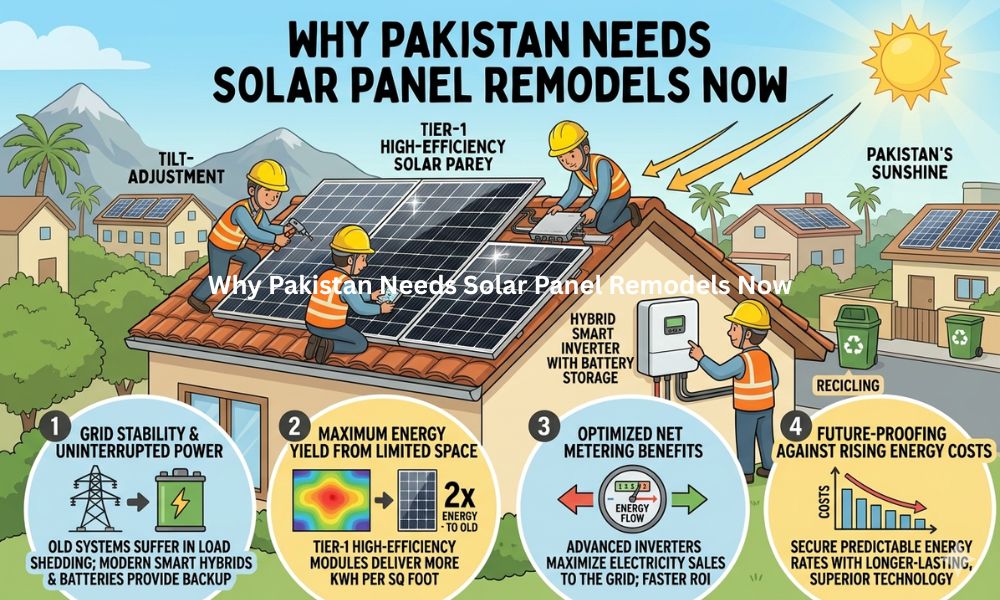
There, we discuss why Pakistan Needs Solar Panel Remodels Now, one by one, as follows. There are a lot of benefits to remodelled solar panels at home in Pakistan because of the very high electricity costs.
Escalating Electricity Costs
It is important to note that NEPRA (National Electric Power Regulatory Authority) has approved multiple tariff increases over the past five years in Pakistan. Residential consumers in many cities are now paying well above Rs. 50 per unit during peak hours, with further hikes expected.
My pro tip: A properly remodelled solar system can reduce your grid dependency by 60–90%, resulting in dramatic bill reductions in Pakistan.
Persistent Load-Shedding
It is also important to note that Urban areas like Lahore, Karachi, and Faisalabad continue to experience 6–12 hours of scheduled outages in Pakistan. There are also a lot of Smaller cities and rural districts that can face even longer interruptions.
My personal experience: Adding battery storage to an existing solar setup during a remodel is one of the most effective ways to maintain uninterrupted power throughout the day and night.
Technology Has Moved Forward
It is also informative news that Solar panel efficiency has improved dramatically by remodelling solar panels at home in Pakistan. Monocrystalline PERC solar panels available in Pakistan today can achieve efficiencies above 21%, compared to the 13–16% offered by older polycrystalline solar panels.
Important Notice: Hybrid inverters, smart monitoring systems, and lithium iron phosphate (LiFePO4) batteries were either unavailable or prohibitively expensive a decade ago; today, they are accessible and practical.
Key insight: If your existing system is more than 5 years old, a remodel is likely to double your effective energy output even if you keep the same number of panels, simply by upgrading the inverter and wiring.
Step-by-Step Process Remodel Solar Panel Installation in Pakistan
There, we discuss completely Step-by-Step Process Remodel Solar Panel Installation in Pakistan as follows.
Step 1: Energy Audit and Load Assessment
It is an important step to begin with a complete household or commercial load analysis in Pakistan in 2026. We need to list every appliance, its wattage, and approximate daily hours of usage. This step determines the new system capacity you need at home.
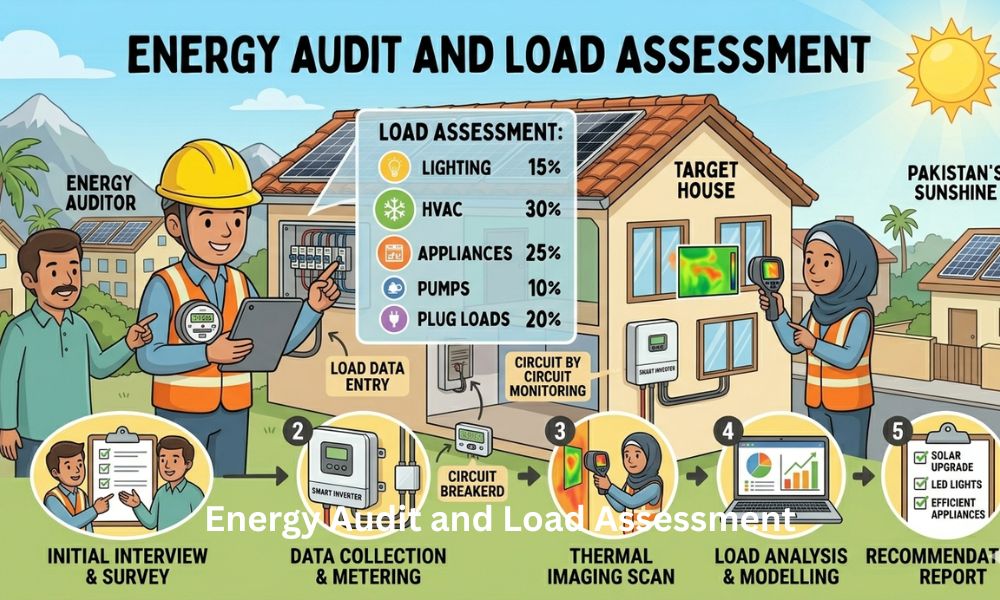
There are also Common Pakistani household loads include tube lights, fans, a refrigerator, a water pump, an air conditioner, and a washing machine, together often requiring a 5 kW to 10 kW system in Pakistan.
Step 2: Site and Roof Inspection
It is also informative news that we need to inspect your roof’s structural health before adding new or heavier solar panel arrays. Check for shading caused by newly grown trees, neighbouring buildings, or water tanks installed after the original system.
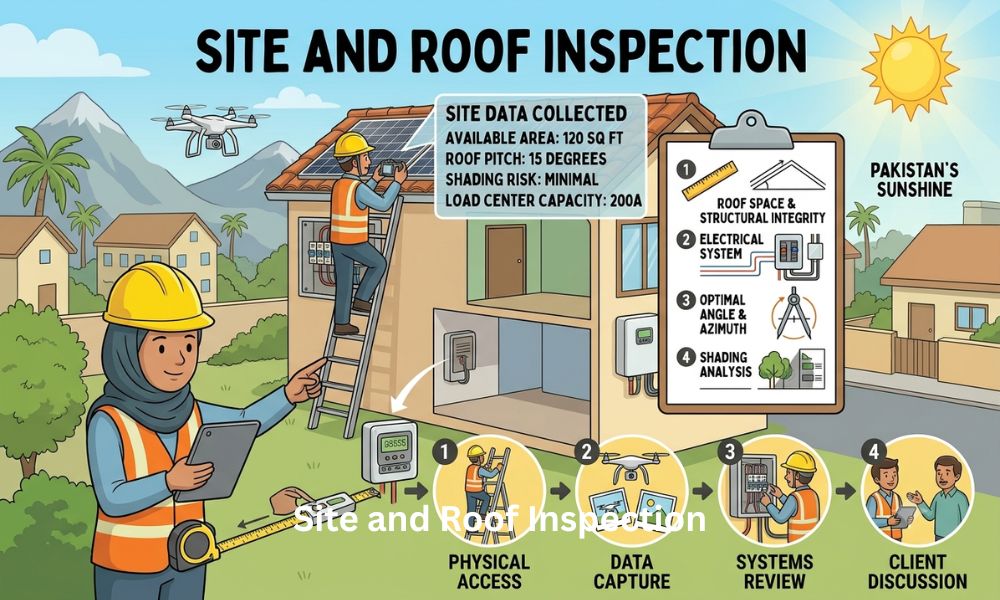
My pro tip: We need to clean rooftop areas facing south (in Pakistan’s northern hemisphere location) between 10° and 25° tilt angles, which yield the best annual output.
Step 3: Existing System Evaluation
It is also a very important thing to have a qualified technician test each solar panel’s output using a solar analyser that makes this remodelling very easy in Pakistan in 2026.
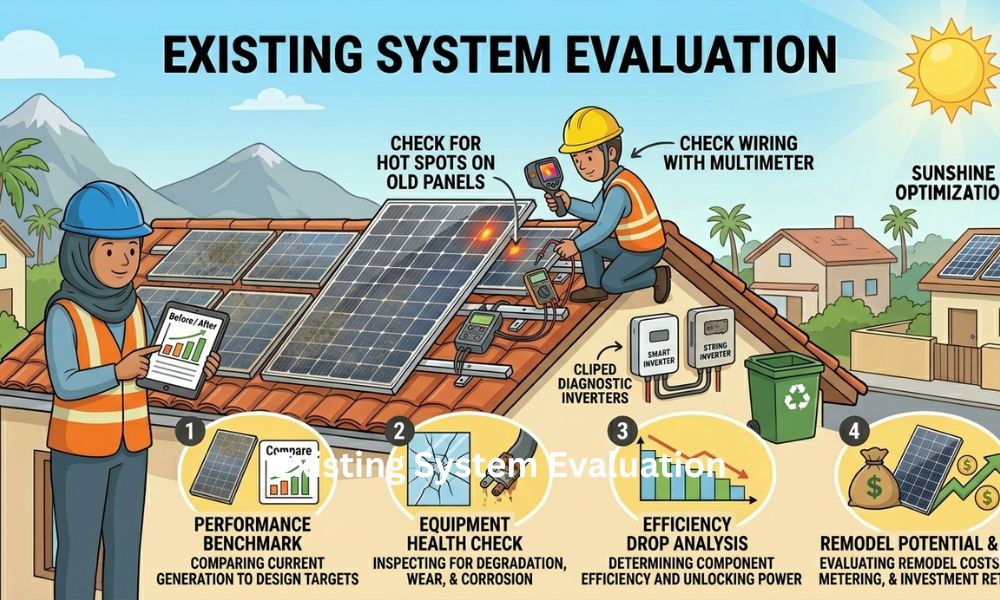
It is informative news that Degraded solar panels producing less than 80% of rated capacity should be replaced with new ones. We need to check the inverter’s efficiency rating, error logs, and warranty status.
My personal experience: We need to inspect daily all DC and AC wiring for insulation damage, loose connections, and undersized cables, a common problem in early DIY installations.
Step 4: System Design and Component Selection
Based on the audit results, design the upgraded system by following some easy steps that are discussed below.
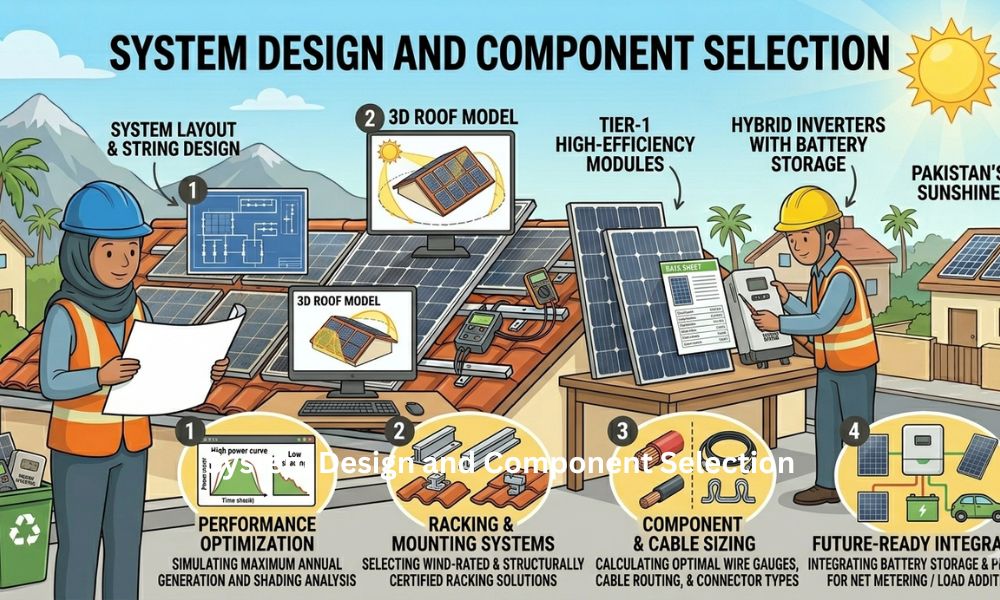
- Choosing between on-grid (net metering), off-grid, or a hybrid configuration
- Selecting panel type: monocrystalline PERC, bifacial, or TOPCon
- Sizing the inverter: string inverter, microinverter, or hybrid inverter with battery port
- Determining battery bank capacity in kWh if backup is required
- Planning for future expansion, such as adding an EV charging point
Step 5: Permits and Net Metering Application
For on-grid systems, Pakistan’s NEPRA net metering policy allows surplus electricity to be sold back to DISCO (distribution companies) at a buy-back rate.
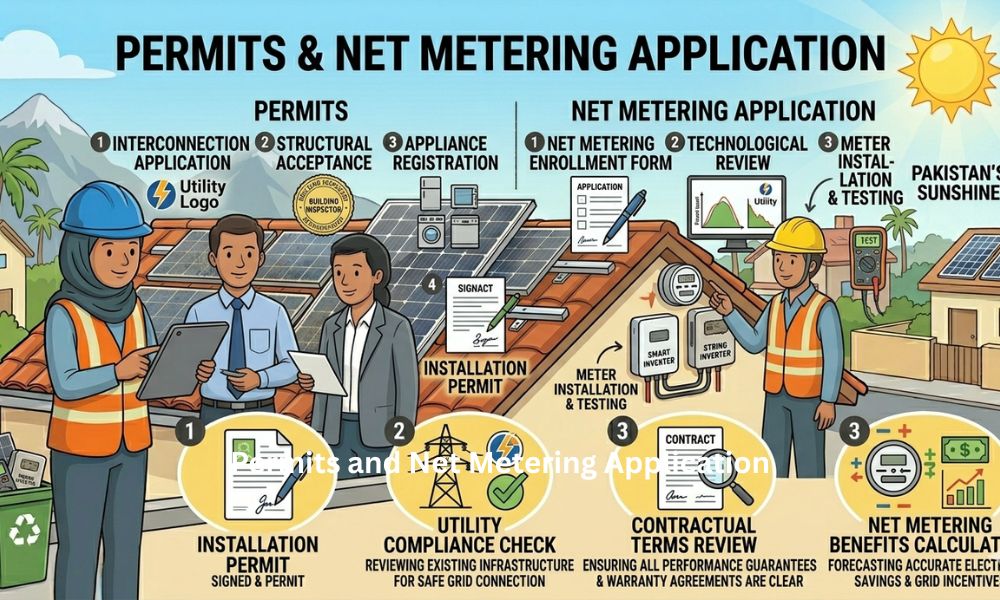
Your installer must submit an application to your local DISCO, such as LESCO, HESCO, MEPCO, or K-Electric.
My pro tip: Approved systems receive a bidirectional meter. This process typically takes 4–12 weeks for approval in Pakistan in 2026.
Step 6: Physical Installation and Commissioning
There are also many Experienced installers who will mount new racking, wire panels in optimal string configurations, connect the inverter, integrate the battery (if applicable), and commission the system in Pakistan in 2026.
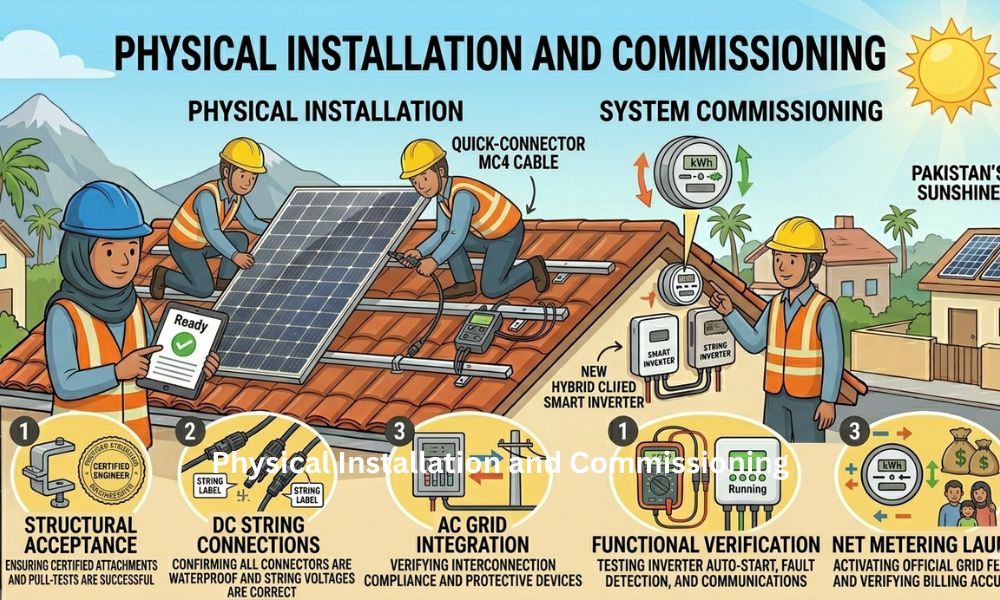
A proper remodel also includes labelling all components, installing surge protection devices (SPDs), and setting up remote monitoring via a mobile app.
Pro tip: Always request a string-level performance test and system commissioning report from your installer before making the final payment. A reputable company will provide this without hesitation.
Choosing the Right Components in Pakistan
There we are discussing completely, choosing the Right Components in Pakistan one by one as follows.
Solar Panels
The Pakistani market is dominated by Chinese brands such as Longi, JA Solar, Trina Solar, and Canadian Solar. These are Tier-1 manufacturers with strong warranties (typically a 10-year product warranty, 25-year linear power output guarantee).
Important note: Locally assembled panels are also available, but quality control can vary; always verify certification from a recognised testing lab.
Inverters
For remodels requiring battery integration, hybrid inverters from brands like Sungrow, Growatt, Deye, Victron, or Voltronic are widely available in Pakistan in 2026. A hybrid inverter manages solar input, grid connection, and battery charging from a single unit, simplifying the remodel considerably.
My personal experience: For purely grid-tied remodels without storage, standard string inverters from Huawei, SMA, or ABB perform excellently.
Batteries
There are a lot of Lead-acid tubular batteries (such as AGS, Osaka, and Phoenix) that remain popular due to their low upfront cost, but they require maintenance and have a shorter cycle life.
These Lithium iron phosphate (LiFePO4) batteries, available from Pylontech, BYD, and local assemblers like Techno Sun, last 4–5 times longer, are maintenance-free, and perform better in Pakistan’s heat.
My pro tip: For serious remodels, lithium is now the standard recommendation.
Latest Cost Breakdown of a Solar Remodel in Pakistan Today 2026
Costs vary significantly by city, system size, and component selection. Below is a typical cost range for a mid-sized residential remodel (5 kW system with 10 kWh battery backup) as of 2024:
| Component | Estimated Cost (PKR) | Notes |
|---|---|---|
| Monocrystalline Panels (5 kW) | Rs. 150,000 – 200,000 | 12–14 panels at 400–450W |
| Hybrid Inverter (5 kW) | Rs. 80,000 – 140,000 | Deye, Growatt, or Sungrow |
| LiFePO4 Battery (10 kWh) | Rs. 250,000 – 400,000 | Pylontech or equivalent |
| Mounting Structure & Wiring | Rs. 30,000 – 60,000 | Galvanised steel preferred |
| Installation & Labour | Rs. 25,000 – 50,000 | Varies by city |
| Net Metering & Permits | Rs. 15,000 – 30,000 | DISCO application fees |
| Total Estimate | Rs. 550,000 – 880,000 | Payback in 3–5 years |
Net Metering in Pakistan: What You Need to Know
Net metering was officially regulated under NEPRA’s 2015 Net Metering Regulations and has since been expanded. As of the latest policy updates, residential consumers with systems up to 1 MW can apply. The electricity exported to the grid is credited to your bill at the applicable consumer tariff rate. This means surplus power generated during the day effectively offsets your nighttime consumption — a powerful financial advantage for grid-tied remodel owners.
Key requirements include: a licensed solar contractor, equipment meeting NEPRA standards, and approval from your local DISCO. The process is increasingly streamlined, and many cities now have dedicated solar desks at their DISCO offices to expedite approvals.
Important: Some DISCOs have temporarily paused new net metering connections in certain feeders due to grid stability concerns. Always check with your local DISCO before finalising your remodel design around net metering export.
Common Mistakes to Avoid During Remodell Solar Panel Installation
There are also many Common Mistakes to Avoid During Remodell Solar Panel Installation in Pakistan.
Undersizing the Battery Bank
A frequent error is installing a battery bank that covers only 4–5 hours of backup when the household actually experiences 8–10 hours of load-shedding. Always size the battery for your worst-case scenario, not your average day.
Ignoring Panel Orientation and Shading
Even partial shading on a single panel in a series string can reduce the output of the entire string by 30–70%. Use microinverters or DC optimisers if shading is unavoidable, or redesign the string layout during the remodel to isolate shaded panels.
Mixing Old and New Panels Without Compatibility Check
Connecting new high-wattage panels in the same string as older lower-wattage panels forces the entire string to perform at the level of the weakest panel. Your installer must calculate Voc and Isc compatibility carefully when expanding an existing array.
Choosing Unlicensed Installers to Save Cost
Pakistan’s solar market has a significant number of informal vendors who use substandard wiring, uncertified charge controllers, and counterfeit panels. Always hire an installer registered with AEDB (Alternative Energy Development Board) or NEPRA to protect both your investment and your safety.
Government Support and Financing Options
The Government of Pakistan has taken several steps to incentivise solar adoption. AEDB provides licensing and technical support frameworks.
The State Bank of Pakistan has periodically offered concessional financing schemes for solar installations through commercial banks at subsidised markup rates.
Additionally, several major banks, including HBL, MCB, Meezan Bank, and Bank Alfalah, offer solar financing products with tenors of 3–7 years.
Provincial governments in Punjab and KP have run solar distribution programmes specifically for agricultural tube wells and low-income households.
Maintenance Tips After Your Solar Panel Remodel
There are also a lot of Maintenance Tips After Your Solar Panel Remodel, and here we discuss them one by one.
- Clean panels with a soft cloth and clean water every 2–4 weeks, especially in dusty cities like Multan, Quetta, and Bahawalpur, where dust accumulation can reduce output by 15–25%.
- Monitor your inverter’s daily generation report through its mobile app to catch any sudden drops that might indicate a faulty panel or connection.
- Check all MC4 connectors and terminal blocks at least once a year for corrosion, especially in coastal areas near Karachi and Gwadar.
- Keep the battery within its recommended state of charge range — avoid deep discharging lithium batteries below 20% regularly to maximise cycle life.
- Schedule an annual professional inspection to verify grounding integrity and the condition of the mounting structure.
The Future of Solar in Pakistan
Pakistan’s solar industry is growing at an extraordinary pace. From large-scale utility projects like Quaid-e-Azam Solar Park to rooftop proliferation in every major city, the country is undergoing a genuine energy transition. Falling panel prices, improving grid infrastructure, and increasing awareness mean that solar remodels will only become more economically attractive in the coming years.
For those who invested early, a well-planned remodel is the logical next step — not a cost, but a reinvestment that positions your home or business for decades of energy independence. With the right components, a qualified installer, and a clear understanding of Pakistan’s net metering policy, a solar remodel delivers some of the most reliable returns available in the country today.

I AM CH SAMI ULLAH, THE TOP SOLAR PANEL SELLER AND INSTALLER IN PAKISTAN, WITH CHEAPEST RATES, OF TOP QUALITY. GET THE LATEST RATES ON SOLAR PANELS, FANS, ACs, TUBE WELLS, SOLAR FRIDGES, AND SOLAR ATTA CHAKKIS. WHATSAPP (03461320821)